

From free electricity and public healthcare to women’s financial assistance, jobs and the fight against drugs, the AAP government approaches the next election with a record to present — and some formidable challenges still to overcome
Saptrishi Soni| November 26 is set to be an important date in the political calendar of Punjab. The Aam Aadmi Party (AAP) will mark its 14th Foundation Day with a major gathering in Moga, turning the occasion into more than a celebration of the party’s organisational journey. With Chief Minister Bhagwant Singh Mann and AAP national convenor Arvind Kejriwal expected to lead the event, the ‘Khushhaal Punjab Maha Rally’ is also being projected as a platform to present the government’s record and set the tone for the 2027 Assembly election campaign.
The choice of Moga, and the scale of the proposed gathering, underline the importance AAP attaches to Punjab as the state where it secured a historic mandate in 2022 and formed its first government. Nearly five years into its tenure, the party is preparing to take its governance record back to the people, placing welfare delivery, public services, employment and its political stand on Punjab’s interests at the centre of the narrative.
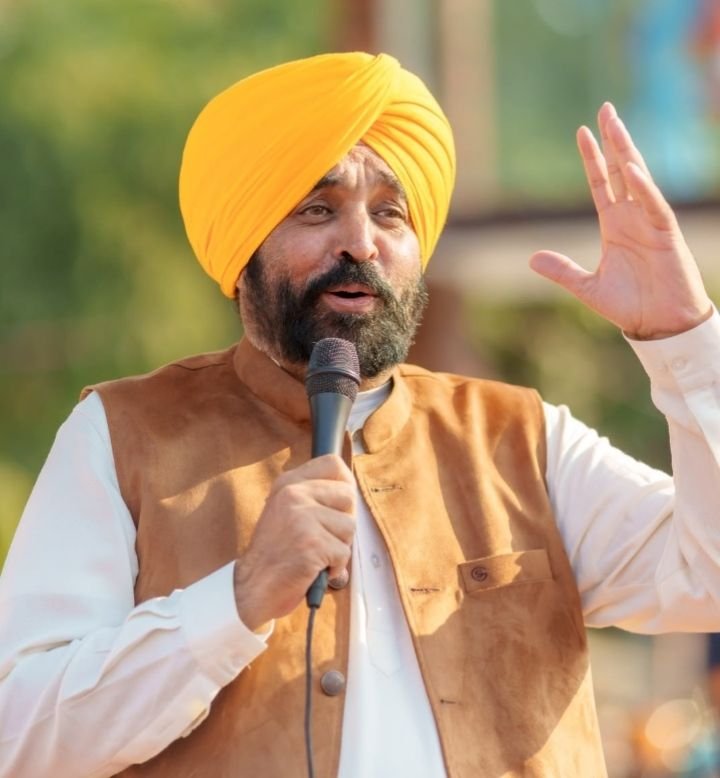
For Bhagwant Mann, the rally will be an opportunity to present his government’s journey as one shaped by a direct relationship with the people. His political style has frequently relied on public interaction, accessible language and an attempt to communicate government decisions in a manner that ordinary households can relate to. That connection has become an important part of his leadership identity, although the ultimate measure of it will be how people assess their experience of governance.
From a sweeping mandate to a government’s report card
When AAP came to power in March 2022, it did so with an emphatic mandate and a promise to change the way Punjab was governed. The party’s campaign had placed particular emphasis on corruption-free administration, better government schools and hospitals, employment opportunities, relief in household expenses and financial support for women.
The Mann government has since built much of its public messaging around these commitments. Among its most visible decisions has been the provision of up to 300 units of free electricity per month to domestic consumers. For many households, the scheme has meant lower electricity bills and has become one of the most recognisable features of the government’s welfare approach.
The expansion of Aam Aadmi Clinics has been another central element of its public healthcare policy. These neighbourhood-level facilities are intended to make basic consultations, medicines and diagnostic services more accessible, particularly for people who would otherwise have to travel to larger government hospitals for routine treatment. The government has also promoted cashless treatment under the Mukh Mantri Sehat Yojna, while announcing the development of new medical colleges and recruitment of doctors.
Education has remained a major part of AAP’s political identity, drawing on the model it had previously promoted in Delhi. The Punjab government has highlighted improvements in government school infrastructure, teacher training and student performance, alongside its claims of strengthening the public education system. The broader test, however, will be whether these initiatives translate into sustained improvements in learning outcomes, access and the quality of education across rural and urban Punjab.
Employment is another area in which the government has sought to establish a measurable record. Chief Minister Mann said in March 2026 that around 65,000 government jobs had been provided during the first four years of the administration, while also citing the creation of additional employment opportunities. Recruitment figures and the experience of young job-seekers will remain important points of public scrutiny as the government approaches the end of its term.
Women’s financial assistance: a long-awaited guarantee
One of the most politically significant announcements of 2026 has been the Mukh Mantri Mawan Dhiyan Satikar Yojana. Financial assistance for women was among AAP’s prominent commitments during the 2022 election campaign. Under the scheme announced by the government, eligible women are to receive ₹1,000 per month, with the amount set at ₹1,500 for eligible Scheduled Caste women.
The government has provided a substantial budgetary allocation for the programme and framed it as recognition of women’s contribution to families and society. For women managing household budgets, even a modest, regular transfer can offer some financial independence and help meet everyday expenses.
Yet the political significance of the scheme will ultimately depend on its implementation: how smoothly beneficiaries are identified, whether payments reach eligible women regularly and whether administrative hurdles are minimised. Its announcement represents an important policy step, but delivery on the ground will determine how it is received.
Mann’s approach to the Centre: drugs, borders and Punjab’s interests
A defining feature of Mann’s tenure has been his frequent public disagreements with the Union Government over issues that he says directly affect Punjab. His interventions have covered the drug menace, border security, the distribution of river waters and the state’s financial concerns.
The fight against narcotics has been among the most persistent and politically sensitive issues. Through the ‘Yudh Nasheyan Virudh’ campaign, the state government has sought to intensify action against drug networks, strengthen policing and pursue those involved in trafficking. Punjab has also announced the deployment of anti-drone technology along sensitive stretches of its international border, describing it as an additional layer of protection against the smuggling of drugs and weapons.
Mann has repeatedly argued that Punjab cannot be expected to tackle the problem in isolation. He has urged the Centre to strengthen border surveillance and take responsibility for preventing narcotics from entering India. In his public statements, he has referred to alleged supply routes involving Pakistan, Gujarat and networks operating through neighbouring Haryana, questioning whether the national response is sufficiently coordinated.
These are serious allegations and claims about trafficking routes must be assessed through evidence from law-enforcement agencies. But the larger point raised by the Chief Minister — that drug trafficking is a cross-border and inter-state challenge requiring close coordination between the Centre, the BSF, state police forces and other agencies — remains central to Punjab’s security debate.
The state’s enforcement campaign has produced a substantial number of cases and arrests. At the same time, the scale of the continuing drug problem means that policing alone cannot be the final measure of success. Rehabilitation, treatment, prevention, action against financial networks and support for affected families will be equally important in determining whether the campaign can bring lasting change.
Law and order more broadly has also remained under close public and political scrutiny. The government has announced operations against organised crime and gang networks, while the police have reported extensive raids and arrests. The challenge is to ensure that enforcement is accompanied by effective prosecution, convictions, witness protection and a wider sense of security among residents and businesses.
Water: a question of Punjab’s future
If drugs represent one of Punjab’s most immediate social and security concerns, water is among its most consequential long-term challenges. The state’s agricultural economy depends heavily on reliable water supplies, while falling groundwater levels have made conservation and a more sustainable irrigation system increasingly urgent.
Mann has repeatedly taken up the Sutlej-Yamuna Link canal dispute with the Centre and Haryana, maintaining that Punjab’s existing water concerns must be addressed before any further sharing arrangement is considered. During discussions convened by the Union Government in 2025, he suggested exploring the use of Chenab river waters to address the wider dispute and called for reconsideration of the SYL proposal.
The proposal reflected the state government’s attempt to place Punjab’s water security at the centre of negotiations. But the dispute remains complex, involving legal positions, inter-state claims and wider questions of water availability. For farmers, the real priority is not simply the political argument but a dependable and sustainable supply for agriculture, alongside measures to reduce excessive dependence on groundwater.
The government’s emphasis on canal irrigation and bringing water to more agricultural fields is therefore an important part of its development agenda. Its long-term impact will depend on the pace of infrastructure work, maintenance of canals and a credible strategy for water conservation.
A leader who seeks to remain close to the people
Mann’s public persona has been different from that of several traditional political leaders in Punjab. His background as a comedian and public performer has given him a communication style built around conversational Punjabi, humour and direct engagement. He has often sought to present himself as a Chief Minister who understands the everyday concerns of ordinary people and is willing to take those concerns into public debate.
For AAP, this personal connect has been an important political asset. It has helped the party give its government a recognisable face and communicate decisions beyond formal government announcements. The Moga gathering will provide another opportunity for Mann to speak directly to supporters and explain how his administration sees Punjab’s progress.
But proximity to the public also brings expectations. Citizens judge a government not only by speeches and announcements but by the quality of services at local offices, the availability of doctors and teachers, the response of the police, the condition of roads, the prospects for employment and the reliability of welfare payments. These everyday experiences will shape the public assessment of the government far more than the scale of any single rally.
Moga: celebration, mobilisation and accountability
The Foundation Day gathering is expected to bring together AAP’s national and state leadership, workers and supporters from across Punjab. The party has described the event as a platform to showcase its achievements and launch its campaign for the 2027 Assembly election. Its ‘Khushhaal Punjab’ theme places the promise of prosperity at the heart of that political message.
For AAP, the occasion is both a celebration of its journey and an exercise in accountability. The party entered Punjab politics promising a departure from established political practices. Its government can point to free electricity, an expanded network of local clinics, recruitment, education initiatives, agricultural measures and the long-awaited announcement of financial assistance for women.
At the same time, the continuing drug crisis, concerns over law and order, the need for more employment, fiscal pressures and Punjab’s unresolved water questions will remain part of the public debate. These are not issues that can be settled by a rally or a report card; they require sustained policy action and results that people can see in their daily lives.
As Bhagwant Mann and Arvind Kejriwal take the stage in Moga, the political message will be about the government’s work and its vision for Punjab. The larger significance of November 26, however, will lie in the questions the people of the state will bring to that record: what has changed, what remains unfinished and whether the promises of a more prosperous Punjab are being translated into durable improvements on the ground.
Editorial notes:
The rally is scheduled for November 26 at village Matwani in Moga, with AAP saying that Kejriwal and Mann will present the government’s performance and launch the 2027 campaign.
The government’s four-year figures on jobs, electricity, clinics, irrigation and healthcare are figures presented by Mann; they should be treated as the government’s account rather than independently audited outcomes.