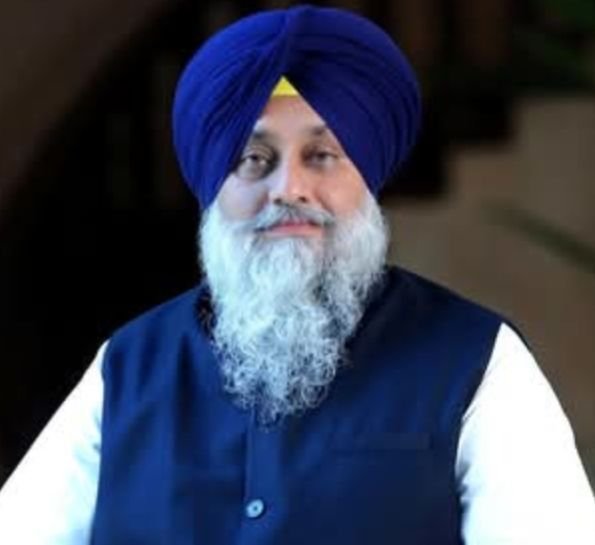
The political atmosphere in Punjab has heated up sharply ahead of the upcoming rural local body polls, with multiple parties levelling accusations of large-scale irregularities in the nomination process. While Congress leader Partap Singh Bajwa’s decision to approach the Punjab and Haryana High Court has already triggered a debate on electoral transparency, a louder and more aggressive challenge has emerged from Shiromani Akali Dal (SAD) president Sukhbir Singh Badal, who has accused the ruling dispensation of “murdering democracy in full public view.”
Badal, known for his combative political style, has launched a statewide political offensive alleging that the government and local administration are acting in tandem to prevent opposition-backed candidates from filing or validating nomination papers. According to him, scores of forms submitted by SAD workers across districts have been rejected “without logic, without scrutiny, and without shame.”
Sukhbir Badal has claimed that officials, under political pressure, deliberately blocked candidates from entering offices, manipulated verification procedures, and even accepted incomplete or incorrect documents from ruling party-backed nominees while subjecting opposition candidates to “unprecedented hostility.” Badal stated that this “planned chaos” is designed to ensure that the rural bodies fall under the indirect control of the ruling alliance even before voting takes place.
To press his concerns, Badal has submitted a detailed memorandum to the **State Election Commission (SEC)**, demanding an immediate halt to the nomination process until a district-wise audit of rejected papers is conducted. According to sources within the SAD, the party has submitted documentation from multiple districts showing identical rejection patterns—ranging from minor typographical errors to unexplained disqualifications—raising suspicion of a coordinated strategy.
Joining this offensive, Bathinda MP Harsimrat Kaur Badal has accused the government of misusing the administration to suppress rival voices. She argued that the brazen rejection of nomination papers is a sign of insecurity, suggesting that the ruling party fears genuine competition in rural belts where dissatisfaction over issues such as farm distress, power supply, and local development has been mounting.
Harsimrat maintained that rural elections form the foundation of grassroots democracy, and any attempt to capture these institutions through manipulation would have long-term consequences for governance. She further urged the SEC to step in decisively and restore public confidence in the electoral process. “When villagers themselves start saying that elections are being stolen before the first vote is cast, it is a warning sign for any democracy,” she remarked.
Congress leader Partap Singh Bajwa, meanwhile, has taken a parallel route by moving the High Court, challenging what he calls “structural interference” in the nomination process. Although Bajwa’s petition highlights irregularities faced by Congress-backed candidates, political analysts note that voices from SAD carry more weight on rural matters due to the party’s historic dominance in Punjab’s village institutions.
Sukhbir Badal has reinforced that this fight is not limited to party lines but is instead an issue concerning the democratic rights of every Punjabi voter. He alleged that the government is deliberately pushing Punjab towards chaos to gain short-term political advantages, describing the situation as “the darkest chapter in the history of panchayati elections.”
What further complicates the situation is the growing resentment among ordinary villagers and independent candidates who also report difficulty accessing administrative offices or receiving proper verification of documents. Many complain of intimidation and favouritism.
The State Election Commission has so far remained cautious in its response, merely acknowledging receipt of complaints and promising to examine the submissions. However, opposition parties argue that mere assurances are inadequate when “unlawful rejections” have already tilted the playing field.
As the controversy widens, pressure is mounting on the SEC to issue clear directives, ensure neutral scrutiny panels at district levels, and potentially extend nomination deadlines. With Sukhbir Badal leading a relentless political charge and other opposition parties echoing similar concerns, the rural poll process in Punjab is now at the centre of a storm that may have far-reaching implications for the state’s political landscape.