Saptrishi Soni
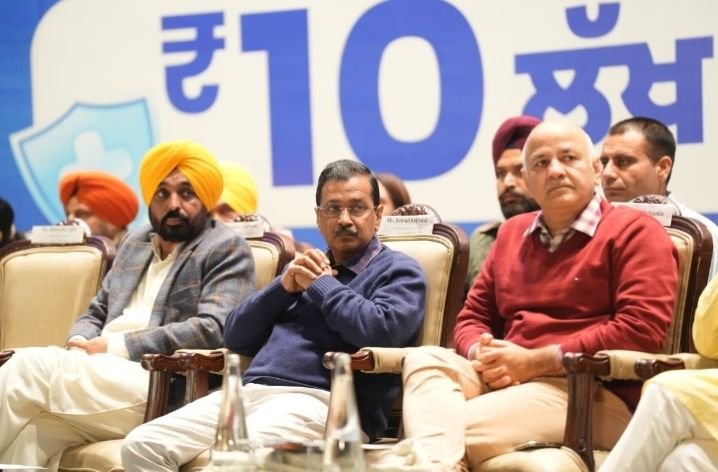
The recent launch of the Mukh Mantri Sehat Yojna (MMSY) — providing free cashless medical treatment worth up to ₹10 lakh per family — is more than a major welfare reform; it is a powerful political milestone for the Aam Aadmi Party (AAP) in Punjab just a year ahead of the 2027 Vidhan Sabha elections. This ambitious universal healthcare initiative, rolled out by National Convenor Arvind Kejriwal and Chief Minister Bhagwant Singh Mann, is expected to significantly reinforce AAP’s electoral prospects by translating governance achievements into tangible benefits for millions of voters across socio-economic groups.
By delivering on a key pre-poll promise and establishing Punjab as the first state in the country to guarantee free healthcare alongside free education, free electricity, and free bus travel for women, the party has strategically positioned itself as a government that fulfils its commitments and addresses the core concerns of ordinary citizens. The scheme’s design — universal coverage with no income limit and inclusion of both government and premium private hospitals — resonates with voters who have faced financial hardship due to medical expenses.
Below is a detailed look at how this and other key policy achievements strengthen AAP’s political standing and the broader implications as the state heads toward the polls.
1. Tangible Delivery of Welfare Promises
The MMSY is a hallmark achievement because it translates a broad political promise into real financial security for families. Health emergencies are a leading cause of economic distress, and by ensuring cashless treatment for serious ailments and critical procedures up to ₹10 lakh, AAP has addressed a deeply felt need among voters. When people see direct benefits — not just rhetoric — trust in the governing party grows, which is crucial for voter retention.
2. Reinforcing AAP’s Identity as a Welfare-Centric Party
By offering a package that combines healthcare, education, electricity and women’s mobility benefits, AAP has crafted a narrative focused on “inclusive governance.” Punjab under AAP is now described by party leaders as a state where “people’s guarantees” are not just slogans but implemented policies. This reinforces the party’s identity as a welfare-oriented alternative to traditional power politics, a messaging advantage ahead of elections.
3. Cross-Sectional Appeal Across Demographics
Universal schemes by design cut across caste, religion, and class divisions, and in a diverse state like Punjab, this inclusivity can translate into broader voter appeal. MMSY’s coverage of all 65 lakh families ensures that no citizen feels excluded, which can blunt opposition efforts to mobilise specific communities on the basis of identity politics.
4. Education and Free Electricity as Additional Political Assets
Alongside healthcare, AAP’s focus on strengthening government schools and proposed educational reforms — including digital classrooms and vocational training — adds to its development narrative. Expanded allocations for school and higher education signal long-term investment in human capital. Free electricity, another widely publicised policy of the state government, is a visible benefit that eases monthly household expenses and enhances the perception of government support. Both these aspects reinforce the party’s claim of comprehensive welfare delivery.
5. Public Perception of Governance Versus Political Rhetoric
In his speech at the MMSY launch, Kejriwal emphasised that AAP’s welfare policies are a result of governance intent rather than mere election rhetoric. He framed the opposition as “power hungry” and internally conflicted — a contrast aimed at persuading voters that AAP’s policy continuity and stability are preferable to the traditional parties’ internal power struggles. This framing can particularly resonate with youth and first-time voters looking for policy over populism.
6. AAP’s Political Narrative on Drugs and Law & Order
While the government’s welfare achievements strengthen its appeal, issues such as drugs, crime and law and order remain significant concerns among voters. Kejriwal and Mann have repeatedly highlighted their administration’s actions against drug traffickers and corruption as part of broader governance reforms. Yet, sustained public confidence may require visible improvements in on-ground law enforcement and community safety — areas where critics argue more work is needed. Addressing these will be vital to translating welfare gains into enduring political support.
7. Opposition Response and the Electoral Context
Opposition parties have criticised the AAP government on various fronts, including allegations of sacrilege and targeting the ruling leadership ahead of the 2027 polls. Such attacks underscore that political competition is intensifying, but they also play into AAP’s narrative of being a government under pressure yet delivering promises. How effectively the electorate interprets this dynamic could influence voting patterns.
the Mukh Mantri Sehat Yojna — along with initiatives in education, electricity and women’s welfare — enhances AAP’s standing as a results-oriented government that delivers material benefits to citizens. By aligning policy achievements with voter priorities, AAP has strengthened its political capital ahead of the Vidhan Sabha elections. However, sustaining this momentum will also depend on addressing persistent challenges in law and order and ensuring governance translates into everyday improvements in people’s lives. If the party successfully consolidates its welfare record with credible responses to socio-economic concerns, it stands well placed to make significant electoral gains.