In a significant move aimed at strengthening public healthcare delivery and easing financial pressures within the state’s medical system, the Himachal Pradesh Government has released ₹100 crore to clear pending payments under the Himcare scheme, while simultaneously accelerating a broader healthcare modernisation programme that seeks to transform medical services across the hill state.
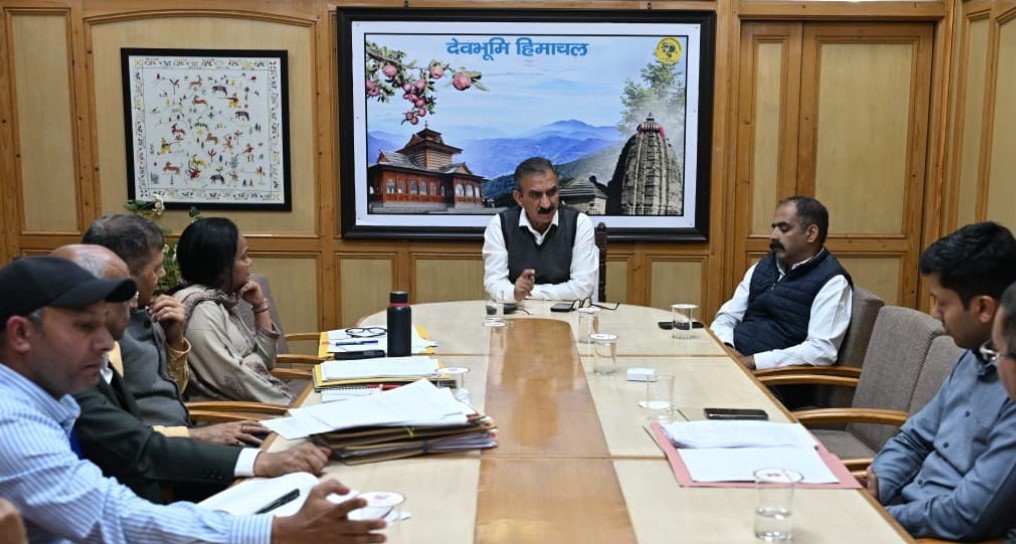
The announcement came during a high-level review meeting of the Health Department chaired by Chief Minister Thakur Sukhvinder Singh Sukhu, who reiterated the government’s commitment to ensuring that quality healthcare is accessible to citizens closer to their homes. The meeting focused on ongoing reforms, infrastructure expansion, diagnostic services, staffing requirements and the deployment of advanced medical technology in public healthcare institutions.
The release of funds under the Himcare scheme is expected to provide substantial relief to healthcare providers and beneficiaries associated with the state’s flagship health insurance programme. Himcare has emerged as an important safety net for thousands of families, particularly those requiring costly medical treatment. Clearing outstanding payments is being viewed as an effort to strengthen confidence in the scheme and ensure uninterrupted healthcare services for beneficiaries.
Beyond addressing immediate financial obligations, the government also unveiled a series of measures designed to modernise diagnostic and treatment facilities across Himachal Pradesh. Chief Minister Sukhu announced that ₹75 crore has been allocated for the establishment of fully automated laboratories at three major medical institutions—Atal Institute of Medical Super Specialties at Chamiyana, Indira Gandhi Medical College (IGMC) Shimla and Dr. Rajendra Prasad Government Medical College at Tanda.
Health officials believe these automated laboratories will significantly improve diagnostic efficiency by enabling multiple medical tests to be conducted simultaneously using a single blood sample. Such technology has the potential to reduce waiting periods, improve diagnostic accuracy and enhance patient experience, particularly in institutions that cater to large numbers of patients from across the state.
The government has also initiated the tendering process for the procurement of advanced medical equipment, including PET scan machines for Tanda Medical College and Hamirpur Medical College. PET scan technology plays a critical role in the detection and management of cancer, neurological disorders and cardiovascular diseases, and its availability within the state is expected to reduce the need for patients to travel outside Himachal Pradesh for specialised investigations.
Perhaps the most ambitious aspect of the government’s healthcare agenda is its plan to invest nearly ₹3,000 crore in modern medical machinery and equipment. The Chief Minister indicated that efforts are underway to introduce world-class healthcare technology in government institutions, reflecting a strategic shift towards strengthening tertiary healthcare infrastructure within the state.
The vision outlined by the government goes beyond infrastructure creation and focuses equally on improving patient experience. Chief Minister Sukhu directed the Health Department to work towards achieving “zero waiting time” for essential diagnostic services such as MRI and CT scans. Long waiting periods for advanced diagnostic tests have traditionally posed challenges for patients, particularly those requiring urgent treatment. Reducing these delays could lead to earlier disease detection and significantly improve treatment outcomes.
The government has also set an ambitious target of eliminating waiting periods for major surgeries in state medical colleges. Health experts often point out that delayed surgeries can lead to complications and additional healthcare costs, making timely surgical intervention a crucial component of effective healthcare delivery.
Recognising that infrastructure alone cannot improve healthcare outcomes, the Chief Minister emphasised the need to address manpower shortages across the sector. He directed officials to prioritise the recruitment of doctors, paramedical professionals and technical staff to ensure that healthcare institutions are adequately equipped to meet growing demand. According to the government, filling vacant positions remains a key component of the broader reform strategy.
The meeting also highlighted the administration’s intention to improve the quality of medicines available to patients. Chief Minister Sukhu advocated the supply of branded and quality medicines through public healthcare institutions and suggested involving the State Food and Civil Supplies Corporation in the procurement process. The proposal reflects an effort to ensure greater transparency, quality assurance and affordability in medicine distribution.
Throughout the review, the Chief Minister repeatedly stressed that healthcare and education remain among the state’s highest priorities and asserted that financial constraints would not be allowed to hinder improvements in these sectors. His remarks come at a time when states across India are facing increasing pressure to upgrade healthcare infrastructure, expand specialist services and improve patient access to modern treatment facilities.
The initiatives announced during the meeting collectively signal a broader transformation agenda that seeks to move Himachal Pradesh towards a more technologically advanced, patient-centric and accessible healthcare system. While the success of these reforms will ultimately depend on implementation and sustained investment, the government’s latest decisions indicate an attempt to address both immediate healthcare challenges and long-term structural needs.
As demand for quality healthcare continues to grow, the coming months will reveal how effectively these investments translate into improved services on the ground. For now, the release of Himcare funds, expansion of advanced diagnostic facilities and commitment to reducing waiting times represent some of the most significant healthcare interventions undertaken by the state government in recent years.