
Shimla:
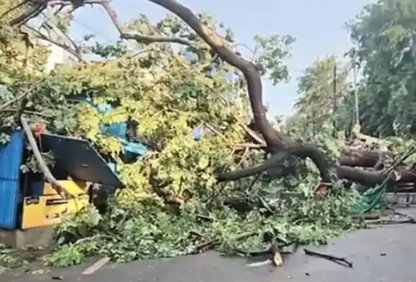
As relentless monsoon rains continue to batter Himachal Pradesh, the state government has intensified one of its largest annual infrastructure restoration operations, deploying nearly 15,000 personnel and around 1,600 heavy machines to reconnect remote regions and restore normal movement after widespread road closures triggered by landslides, flash floods and cloudbursts.
The large-scale mobilisation comes at a time when Himachal Pradesh is once again confronting the destructive face of the southwest monsoon—a recurring challenge that has, over the past several years, claimed hundreds of lives, washed away roads and bridges, damaged public infrastructure worth thousands of crores of rupees, and left entire communities cut off for days.
According to the Public Works Department, restoration efforts have yielded encouraging results over the past 24 hours. The number of roads blocked due to rain-related incidents has reduced considerably following continuous round-the-clock operations. Officials expressed confidence that several more roads would be reopened before the end of the day as engineering teams continue clearing debris and stabilising vulnerable stretches.
The restoration campaign extends across some of the state’s most difficult mountain terrain. Heavy earthmoving equipment, including excavators, bulldozers, JCB machines and specialised mechanical units, has been strategically positioned across vulnerable districts to ensure immediate response whenever fresh landslides or road cave-ins occur.
Officials said additional machinery has also been hired to ensure there is no shortage of resources during the peak monsoon period, when weather conditions can change within minutes and emergency responses often determine how quickly isolated communities can be reconnected.
The current spell of rainfall has once again underlined the fragile nature of mountain infrastructure in Himachal Pradesh. Continuous rainfall weakens hill slopes, increasing the likelihood of landslides, while sudden cloudbursts can transform small streams into destructive torrents capable of washing away roads, bridges and protective retaining structures.
In recent years, the state has repeatedly witnessed the devastating consequences of extreme weather events. Entire villages have been affected by landslides, highways have remained blocked for days, bridges have collapsed under swollen rivers, and critical public infrastructure has suffered extensive damage. Every monsoon season presents fresh challenges for rescue agencies, engineers and local administrations working to maintain connectivity across difficult Himalayan terrain.
Authorities have appealed to residents to remain vigilant throughout the ongoing monsoon season. People have been advised to avoid travelling through landslide-prone areas during periods of intense rainfall and to immediately report road damage, slope failures or rising water levels to the district administration so that emergency teams can respond without delay.
Particular attention is being paid to districts such as Mandi, Kullu, Kangra, Chamba and Shimla, where difficult topography and heavy rainfall frequently combine to disrupt transportation and isolate rural settlements. Emergency response teams remain stationed across these districts to ensure quicker deployment whenever fresh incidents are reported.
The government has also emphasised the importance of restoring roads before the peak apple harvesting season gathers momentum. Himachal’s horticulture economy, particularly apple production, depends heavily on uninterrupted road connectivity for transporting fruit from orchards to markets across northern India. Even short disruptions during harvest season can translate into significant financial losses for growers and affect the state’s rural economy.
Senior officials recently conducted an extensive review of preparedness measures, directing field engineers to restore blocked roads within the shortest possible time wherever conditions permit. Departments have also been instructed to maintain constant coordination so that machinery, manpower and emergency services can be shifted rapidly to locations facing fresh weather-related emergencies.
Weather experts have warned that active monsoon conditions are likely to persist over the coming days, keeping the risk of landslides, flash floods and road damage high across the Himalayan state. Authorities say while restoring damaged infrastructure remains the immediate priority, ensuring public safety continues to be the foremost objective as Himachal Pradesh navigates another testing monsoon season marked by increasingly frequent and intense weather events.