

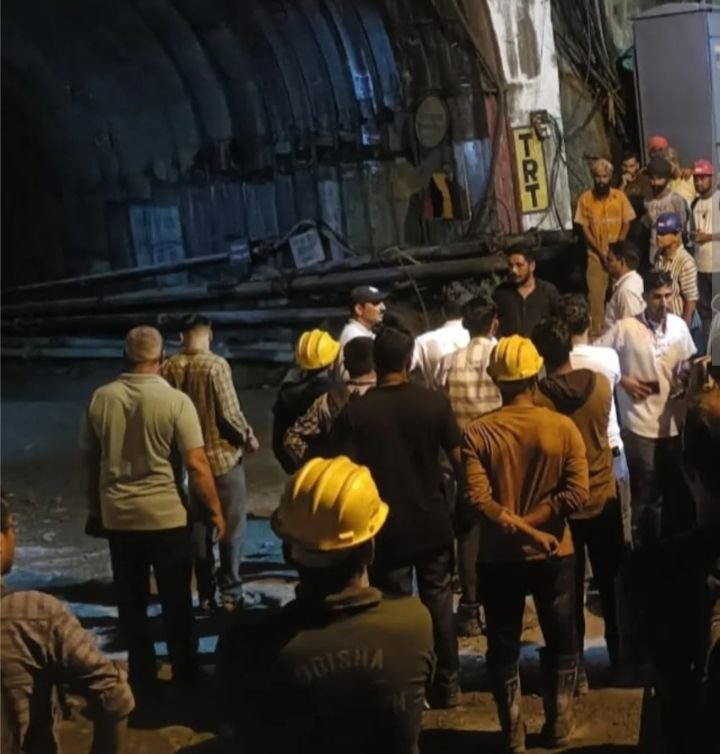
Chamoli: At least nine workers have died and 12 others were injured after a major landslide triggered flooding inside a tunnel at the THDC hydropower project in Peepalkoti, Chamoli district of Uttarakhand.
The accident occurred at around 7pm on Thursday, August 13, inside the project’s TRT (Tail Race Tunnel), where a group of workers were engaged in reinforcement work involving the installation and tying of steel bars.
According to the preliminary account, around 16 to 17 workers were inside the tunnel when a massive landslide occurred approximately 150 metres away from them. A large volume of debris, rocks and water suddenly entered the tunnel at high speed, leaving the workers with little time to respond.
The incident quickly turned into a major rescue operation as the tunnel was inundated with water and filled with debris following the landslide.
Nine workers have so far been confirmed dead, while 12 others sustained serious injuries. Three workers remain unaccounted for and rescue teams are continuing their search.
The scale of the incident has raised concerns over safety arrangements at the hydropower project, particularly the measures in place to monitor geological conditions and protect workers operating inside the tunnel.
Uttarakhand Chief Minister Pushkar Singh Dhami has been closely monitoring the situation from the state disaster control room in Dehradun. He directed the minister in charge to reach the site and take stock of the rescue and relief operations.
Rescue agencies and project authorities have been working to clear debris and reach the workers who remain trapped or missing. The operation has been complicated by the presence of water and unstable material inside the tunnel.
The accident has also brought the safety of workers employed in major infrastructure and hydropower projects in the Himalayan region back into focus. Uttarakhand’s difficult mountainous terrain makes tunnel construction particularly vulnerable to landslides, rockfall, sudden water ingress and other geological hazards.
Preliminary questions have also reportedly been raised regarding possible lapses on the part of the THDC management. Authorities are expected to examine whether adequate safety protocols were followed, whether warning signs of geological instability were detected and whether the workers had been provided with appropriate emergency arrangements.
However, the allegations of negligence have not yet been conclusively established, and a formal investigation will be required to determine responsibility.
For the families of those involved, the immediate concern remains the search for the missing workers and treatment of those injured.
The tragedy is likely to trigger a wider examination of safety standards at hydropower and tunnel projects across Uttarakhand, where several large infrastructure projects are being developed in challenging Himalayan conditions.
As rescue operations continue, authorities face the twin task of locating the missing workers and establishing how such a large quantity of debris and water entered the tunnel so suddenly. The findings of the investigation could determine whether the accident was solely the result of an unforeseen geological event or whether preventable safety failures also contributed to the tragedy.