
Saptrishi Soni:
The Congress faces a familiar problem in Punjab: it has political experience, a substantial support base and prominent leaders, but continues to struggle with internal competition.
With the 2027 Assembly election approaching, the rivalry between different factions has become an increasingly visible challenge for the party.
The central contest involves Punjab Congress president Amrinder Singh Raja Warring, former chief minister Charanjit Singh Channi and other senior leaders, including Partap Singh Bajwa. The differences are not simply about personalities; they reflect competing views about who should lead the party’s campaign and who should eventually emerge as its principal political face.
Congress leadership has repeatedly attempted to project unity. But recent political events have suggested that the disagreements remain unresolved.
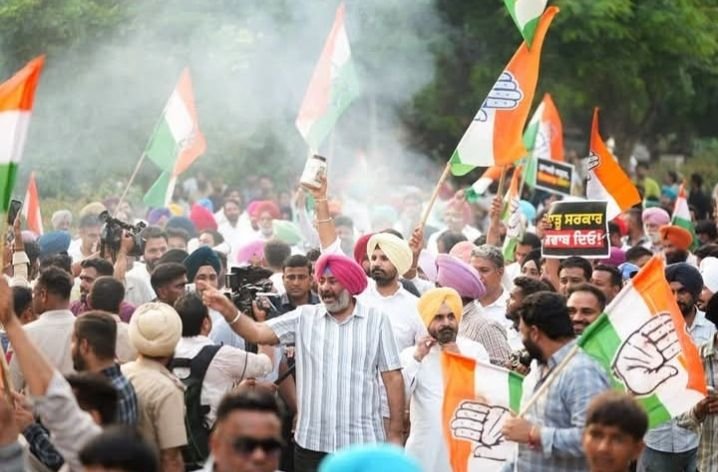
At the Rakhar Punia gathering at Baba Bakala, Channi demonstrated his political following, while Warring and his supporters were notably absent from the event. That contrast revived questions about whether the state unit can enter the election campaign with a coherent leadership structure.
Partap Bajwa has also been engaged with the central leadership as the party attempts to address factional differences. A meeting with Rahul Gandhi in Delhi came amid continuing discussions over the future direction of the Punjab unit.
The Congress problem is particularly important because the party remains one of AAP’s principal challengers.
Punjab has traditionally been one of Congress’s strongest states, and the party returned to power in 2017 under Captain Amarinder Singh. But the 2022 election transformed the political landscape when AAP won a decisive majority and Congress was pushed into opposition.
The Congress subsequently performed better in the 2024 Lok Sabha election, winning seven of Punjab’s 13 parliamentary constituencies. That result demonstrated that the party retains considerable electoral potential.
But translating parliamentary success into an Assembly victory will require organisational discipline.
AAP is likely to campaign on its record in government. BJP is attempting to expand. SAD is rebuilding. Waris Punjab De is seeking space among sections of the electorate. In such an environment, Congress cannot afford to spend too much of the campaign fighting internal battles.
There is also a larger leadership question.
Should Congress project a chief ministerial face before the election, or should it fight collectively and decide leadership after the result? Different leaders and their supporters appear to have competing preferences.
For voters, the issue is whether Congress can turn its political potential into a unified electoral machine.
The party’s immediate challenge is therefore not simply defeating AAP. It is demonstrating that its own leaders can agree on who should lead that challenge.
If the internal contest continues into the election campaign, Congress risks allowing rivals to define its narrative.
If the leadership succeeds in imposing unity, however, the party could remain one of the most serious contenders in the 2027 contest.