
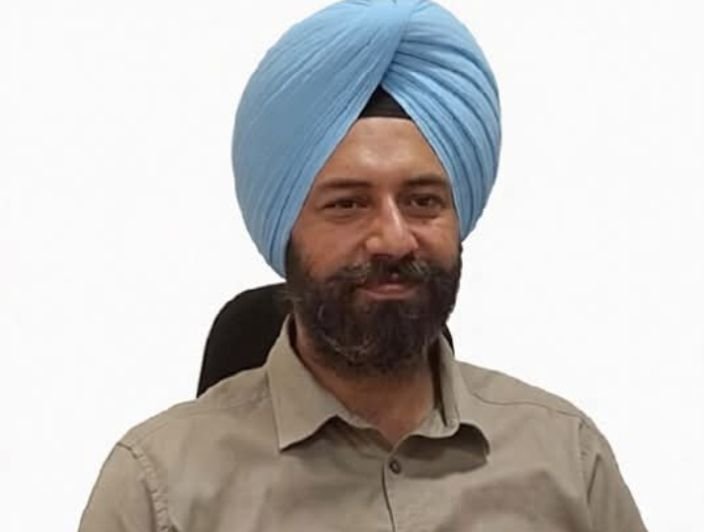
Senior IAS officer Gurkirat Kirpal Singh has taken charge as the new Chairman-cum-Managing Director of Punjab State Power Corporation Limited (PSPCL), replacing Basant Garg at a time when Punjab is dealing with a severe power supply crunch and growing pressure from farmers, industry and domestic consumers.
The change in leadership was ordered on September 14, with the Punjab government assigning the additional charge of PSPCL and Punjab State Transmission Corporation Limited (PSTCL) to Singh. A 2001-batch IAS officer, Singh has also been given charge as Principal Secretary, Power and Renewable Energy Sources. Basant Garg, a 2005-batch IAS officer, has been shifted to the Industries and Commerce Department.
The administrative reshuffle came against the backdrop of an unusually difficult power situation in the state. Punjab’s peak electricity demand crossed 16,500 MW in September, while the available generation was under considerable pressure. Industrial consumers in several major cities reported prolonged outages, while farmers and households in rural areas also faced unscheduled cuts.
The timing of the change has therefore placed Singh at the centre of one of the most immediate administrative challenges facing the state’s power sector: maintaining reliable supply during the paddy season while dealing with generation constraints, fuel availability and rising demand.
A power system under pressure
The crisis has been linked to several factors rather than a single disruption. Two major private thermal power units had developed technical problems, while coal availability at some plants also came under pressure. At the same time, the sharp rise in demand widened the gap between Punjab’s own generation and the electricity required by consumers.
According to reports, PSPCL has had to depend heavily on electricity purchased from the central grid to bridge the shortfall. Internal generation has remained substantially below peak demand, increasing the importance of power procurement, thermal-plant performance and fuel management.
Punjab Power Minister Tarunpreet Singh Sond has attributed part of the recent difficulties to technical problems at thermal plants and coal-supply issues, while saying that efforts were being made to restore generation capacity. The government has also said that all available thermal units were being brought back into operation.
The opposition, meanwhile, has blamed the state government for what it describes as poor planning and mismanagement. Congress leaders, including Punjab Congress president Amarinder Singh Raja Warring, have held protests over the outages and questioned the functioning of PSPCL. These are political allegations and have been disputed by the government, which has pointed to increased demand, coal supply and technical problems.
Singh faces an immediate operational challenge
Gurkirat Kirpal Singh is not new to the power administration. His previous responsibilities have included the power portfolio, and his latest assignment brings him back to the sector at a particularly demanding moment.
His immediate priorities include balancing demand and supply, ensuring adequate coal availability, monitoring the performance of thermal power plants, managing electricity purchases and strengthening transmission arrangements.
At his first meeting with senior officials of PSPCL and PSTCL on Friday, Singh reviewed electricity demand and supply, generation, power purchases, thermal-plant performance, coal availability, transmission arrangements and billing. He directed officials to ensure reliable and uninterrupted electricity supply across the state.
He also stressed uninterrupted supply for domestic and commercial consumers and directed officials to ensure eight hours of uninterrupted electricity to farmers for agricultural purposes according to the prescribed schedule.
Why the appointment matters
The change at the top of PSPCL comes at a politically sensitive moment for the Bhagwant Mann government. Power supply has become an issue not only for households but also for Punjab’s agricultural and industrial sectors, both of which are crucial to the state economy.
For farmers, electricity availability during the paddy season directly affects irrigation operations. For industry, prolonged outages can disrupt production, increase operating costs and force businesses to depend on alternative power arrangements.
The government has maintained that the situation has improved after technical problems at generating stations were addressed and additional power arrangements were made. However, continued reliability of supply will be the key test for the new PSPCL leadership.
For Gurkirat Kirpal Singh, the assignment is consequently more than a routine bureaucratic change. His tenure begins with the task of restoring confidence in Punjab’s power supply system while managing a difficult combination of rising demand, generation constraints, fuel logistics and competing demands from agriculture, industry and households.