
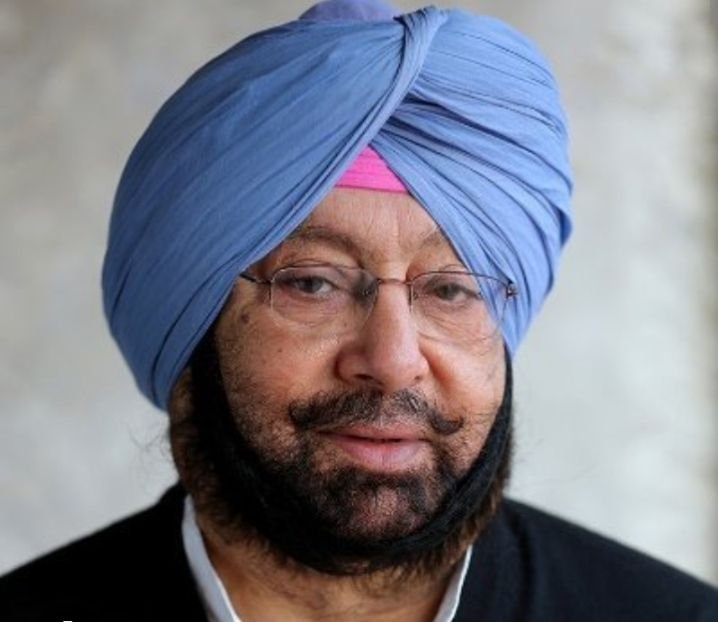
With Punjab heading towards another Assembly election and the political landscape beginning to take shape, former Chief Minister Capt Amarinder Singh has delivered a striking assessment of his own party’s position in the state — saying that the BJP has not consulted him on Punjab politics or policy during his four years in the party.
The remarks are significant not simply because they come from a senior leader, but because Amarinder Singh is a veteran of Punjab politics with decades of electoral experience. He served twice as Punjab Chief Minister as a Congress leader, represented the state in Parliament, served multiple terms as an MLA and remained deeply involved in Punjab politics before leaving the Congress in 2021. He subsequently formed the Punjab Lok Congress, contested the 2022 Assembly election and later merged his party with the BJP.
In an extensive interview with The Tribune, Amarinder Singh was asked directly what he had gained from joining the BJP. His answer was unusually blunt: “nothing, really.” He said that after joining a political party, a leader with his experience would expect to be consulted on matters concerning the state, but claimed that the BJP had not held a single meeting with him on Punjab policy or politics in the past five years.
For a party preparing for a crucial Punjab election, the comment carries political weight because Amarinder Singh has spent much of his career operating at the ground level of the state’s politics. He told The Tribune that he had been involved in Punjab politics for nearly six decades, had served as Chief Minister twice, MLA six times and MP twice. He argued that leaders who understand the state’s political dynamics and local networks should at least be consulted, even if the party ultimately chooses not to accept their advice.
His assessment of the BJP’s position in Punjab was equally candid. Amarinder Singh said the party currently did not have sufficient ground support and acknowledged that its prospects could change rapidly in the months ahead. He also argued that the BJP had historically struggled to develop an independent political base in Punjab because of its long-standing role as the junior partner in its alliance with the Shiromani Akali Dal.
At the same time, he did not advocate that the BJP fight the coming election entirely on its own. On the contrary, he said an alliance would be necessary if the party’s objective was to form a government, pointing towards the possibility of an understanding with the Akalis while stressing the importance of building a stronger district-level organisational structure.
His comments come at a particularly important moment for Punjab politics. The next Assembly election is only months away, and the state’s traditional political alignments have undergone substantial changes since Amarinder Singh’s second tenure as Chief Minister ended in 2021.
The Congress, his former party, remains a significant political force, but Amarinder Singh described the party as internally divided. He similarly pointed to fragmentation within the Shiromani Akali Dal, while describing Punjab’s political environment as unsettled and difficult to predict. His broader assessment was that several political forces were competing for space and influence, leaving the eventual shape of alliances uncertain.
Amarinder Singh’s relationship with the Congress adds another layer to his latest comments. Despite leaving the party after his removal as Chief Minister in September 2021, he said he still retained affection for the organisation after spending roughly five decades within it. He ruled out returning to the Congress, however, and explained that his departure had followed a political decision by the party leadership rather than a decision he had sought himself.
His remarks about the BJP therefore do not amount to an announcement of a political departure. Instead, they reveal a veteran politician publicly acknowledging the limitations of his current party’s position in Punjab while questioning why his experience has not been used in shaping its state strategy.
Amarinder Singh also appeared to leave the door open to the possibility of a political role for his family in the 2027 election. He said that he was unlikely to contest himself, although he stopped short of ruling it out completely, and indicated that his daughter is working extensively on the ground. He said it remained to be seen whether she would eventually contest.
Perhaps the most consequential part of his assessment is his warning that Punjab politics cannot be understood only through the prism of national party structures. Amarinder Singh argued that the BJP needs deeper engagement at the block and district levels and said political parties have to understand Punjab through sustained ground-level work.
That observation is particularly relevant as the election approaches. Punjab has historically had a political culture that does not always mirror national electoral trends. Local leadership, farmers’ issues, religious and regional sentiment, rural networks, organisational strength and the personal credibility of candidates have all played important roles in shaping the state’s politics.
Amarinder Singh’s own career illustrates that complexity. He moved from the Congress to the Punjab Lok Congress and subsequently into the BJP, while continuing to retain political relationships across party lines. In the interview, he spoke positively about maintaining personal relations with leaders of his former party even while remaining politically separate from them.
His comments on the BJP’s understanding of Punjab were especially pointed. Asked whether the BJP understands the state, Amarinder Singh answered in the negative and argued that the party had not spent sufficient time governing Punjab to acquire the kind of political understanding that comes from working upwards from the block and district levels.
That is ultimately the central message running through his interview: Punjab cannot be approached simply as another state in a national electoral strategy. The BJP, in his assessment, needs stronger local organisation, wider alliances and greater engagement with people who possess long experience of the state’s political ground.
As the 2027 Assembly election draws closer, Amarinder Singh’s intervention is therefore significant less as a declaration of his own political future and more as an assessment from one of Punjab’s longest-serving political figures. He remains with the BJP, but his public admission that he has not been consulted on Punjab politics, coupled with his acknowledgment that the party lacks sufficient ground support, puts the spotlight on a question that all major political formations will have to confront: how effectively can they translate national political machinery into a credible, locally rooted Punjab campaign?
For Amarinder Singh, the answer appears to lie in alliances, organisation and understanding the state from the ground up — themes that could become increasingly important as Punjab moves into the final stretch before the next Assembly election.