
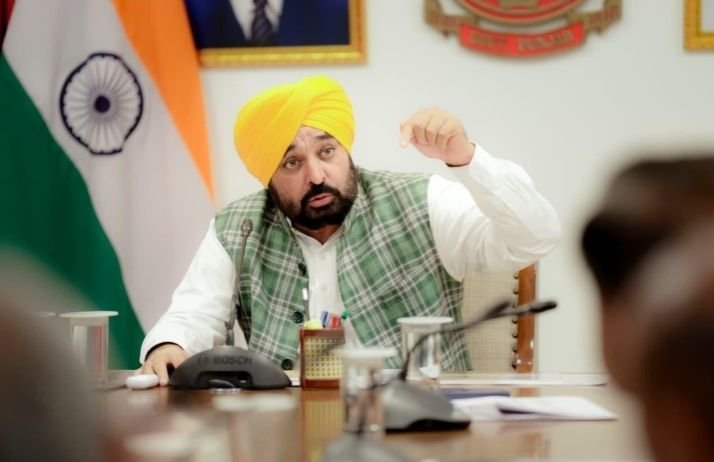
Punjab Chief Minister Bhagwant Singh Mann has approved a pilot scheme to add spiritual and psychosocial support to medical de-addiction treatment in border districts, while also ordering a new groundwater recharge and conservation project in two central districts.
De-addiction pilot in Amritsar, Tarn Taran and Fazilka
The state has given in-principle approval for a pilot spiritual wellness programme to run alongside existing Outpatient Opioid Assisted Treatment (OOAT) clinics and in jails in Gurdaspur and Kapurthala, with the initial rollout focused on Amritsar, Tarn Taran and Fazilka.
CM Mann said the aim is to bridge the gap between medication and long-term rehabilitation, noting that keeping patients in treatment during the first few months remains a major challenge despite wider access to medicines. He described de-addiction as “also a battle involving emotions and willpower”, arguing that medical treatment alone is not enough to ensure lasting recovery.
Under the plan, trained local personnel are expected to gradually take over delivery of the programme, reducing dependence on external support and helping embed the initiative within communities. The government says the move is part of a broader shift from a primarily enforcement-led approach to one that emphasises rehabilitation, relapse prevention and community participation.
Programmes in clinics and jails
As part of the same push, spiritual programmes are to be launched at OOAT clinics and in central jails in Gurdaspur and Kapurthala. The meeting was attended by Chief Secretary K.A.P. Sinha and other senior officials, with the chief minister chairing discussions on expanding psychosocial care alongside clinical treatment.
Groundwater recharge pilot in Mansa and Sangrur
Separately, CM Mann directed that a groundwater recharge and conservation project be piloted in Mansa and Sangrur districts before any statewide expansion. He stressed the need to “conserve every drop of groundwater” and called for coordination across government departments so that awareness campaigns reach farmers, students and youth.
The chief minister highlighted recent improvements in Punjab’s irrigation infrastructure, saying the government has laid about 14,000km of pipelines and expanded canal networks to reduce reliance on tube wells. He claimed canal water utilisation for agriculture has risen from around 22% when his government took office to about 88% now, a figure repeated in several recent statements and reports.
On groundwater stress, Mann said the number of critically stressed blocks has fallen from 166 in 2022 to 152 in 2026, with about 90 of those showing rising water levels of roughly 1–1.5 metres.
Punjab has long faced a severe drug crisis, with successive governments expanding OOAT clinics and treatment services while also pursuing stricter enforcement against trafficking. The latest pilot reflects an attempt to layer psychosocial and spiritual support over clinical care to improve retention and reduce relapse.
At the same time, agriculture-intensive cropping patterns and heavy groundwater use have put pressure on aquifers, prompting a push towards canal irrigation, watercourse restoration and recharge schemes. The Mansa–Sangrur pilot is being positioned as a test bed for strategies that could later be scaled across the state. The initiatives were announced during a meeting with a delegation from the Art of Living Foundation, which will support the spiritual programmes and the groundwater pilot.