Saptrishi Soni l
For the Congress in Punjab, the countdown to the 2027 Assembly election has begun at an awkward moment. The party is trying to recover from years of organisational instability, competing leadership centres and an increasingly fragmented political landscape, even as the Aam Aadmi Party government prepares to seek a second term and the BJP and Shiromani Akali Dal remain important players.
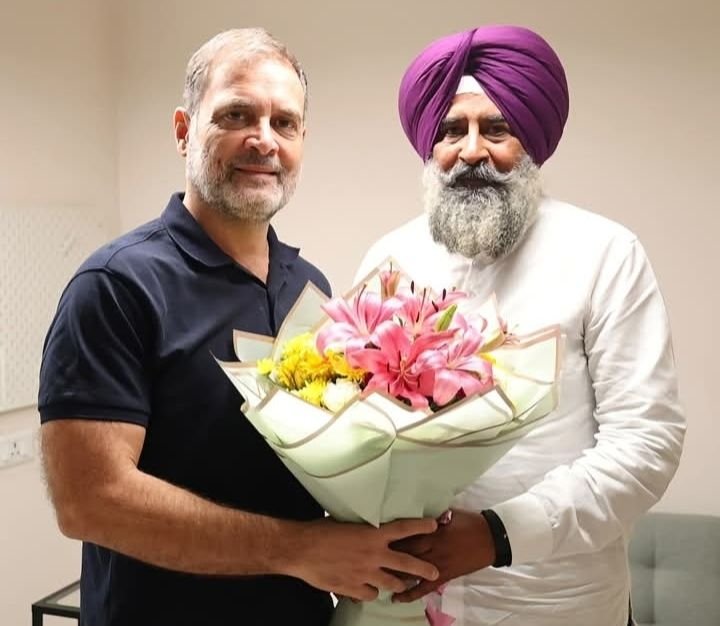
The latest change at the top has only underlined the problem. Congress has replaced Amarinder Singh Raja Warring with former India hockey captain and Jalandhar Cantonment MLA Pargat Singh as Punjab Pradesh Congress Committee president. The change came just months before the Assembly election and after prolonged differences between rival factions in the state unit.
But beneath the immediate question of who leads the party lies a more complicated electoral issue: whether Congress still has a sufficiently broad social and political coalition in Punjab.
One part of that debate concerns Hindu voters.
Hindus are not a marginal constituency in Punjab. The 2011 Census recorded Hindus as a substantial minority of the state’s population, at close to two-fifths. They are particularly important in several urban and semi-urban belts, including parts of the Doaba, Majha and Malwa regions. The demographic picture is therefore more complicated than the traditional assumption that Punjab politics is primarily a contest between Sikh-majority rural constituencies and religious or caste-based political blocs.
The Congress has historically benefited from this diversity.
For decades, the party’s strength rested partly on its ability to accommodate different communities, regions, castes and political traditions under one umbrella. Hindu leaders with influence in cities and trading communities were an important part of that structure. The names and political careers have changed over time, but the underlying lesson remains: a party that wants to govern Punjab cannot afford to be perceived as representing only one social bloc.
Today, critics within and outside the Congress argue that this balance has weakened.
The departure of leaders such as former Batala MLA Ashwani Sekhri is frequently cited in this context. Sekhri, a three-time Congress MLA and one of the party’s prominent Hindu faces in the Majha region, left Congress for the BJP in 2023 after expressing dissatisfaction with the state organisation. His departure was significant not merely because of his individual electoral history, but because it added to the perception that Congress was losing established Hindu leadership in parts of northern Punjab.
The same concern surfaced more visibly during the recent debate over the state Congress presidency.
Before Pargat Singh’s appointment, Vijay Inder Singla was widely reported to be the frontrunner. Singla, a former minister, former Sangrur MP and Congress Working Committee member, was seen as an important Hindu face within the state organisation. The party had already entrusted him with the Election Management and Coordination Committee as part of its July restructuring.
His eventual non-selection, followed by Pargat Singh’s appointment, has naturally generated discussion about the balance between community representation and factional reconciliation. It would, however, be premature to conclude that Singla was rejected because he is Hindu. Available reporting points instead to a complicated calculation involving factional rivalries, regional equations, caste representation and the need to find a leader capable of bringing different camps together.
That distinction matters.
Punjab Congress does not have a Hindu-leadership problem simply because its new president is Sikh. Pargat Singh’s appointment could prove politically valuable if he succeeds in doing what the party has struggled to do for several years: unite competing camps and build a functioning election machine.
The real question is whether that organisation will simultaneously create enough political space for leaders from other communities, including influential Hindu leaders in urban Punjab.
The challenge is particularly important because Congress is fighting on several fronts.
The party remains the principal challenger to the AAP government, but it cannot assume that anti-incumbency will automatically translate into a Congress vote. The BJP is attempting to expand its independent presence in Punjab, while the Akali Dal is seeking to regain political relevance. Newer political formations and smaller parties can also divide traditional vote banks. Congress therefore needs to retain its existing supporters while attracting voters who may have moved towards the BJP, AAP or regional alternatives.
Internal unity is an equally urgent issue.
In September, senior Congress leaders associated with the Charanjit Singh Channi camp stayed away from a major protest organised by Warring, highlighting the continuing factional tensions inside the state unit. The Congress high command subsequently changed its Punjab affairs leadership and moved towards a new organisational arrangement.
The party’s challenge, therefore, is bigger than the choice of a state president.
It needs a credible second line of leadership across regions. It needs leaders who can speak to urban voters, traders, professionals, farmers, Dalits, OBCs and the Hindu middle class without reducing Punjab politics to religious arithmetic. And it needs to convince sitting and potential leaders that political space within Congress is available to them.
This is particularly important in cities such as Amritsar, Jalandhar and Ludhiana, as well as in the urban belts adjoining Chandigarh and other major commercial centres. These areas can have an electoral impact well beyond their demographic size because of their concentration of swing voters, business communities and politically active middle-class households.
Congress’s own July restructuring recognised the need for a broader social balance. Alongside retaining Warring and Partap Singh Bajwa at that time, the party appointed Dalit and OBC working presidents, gave Charanjit Singh Channi a leading role in the campaign committee and assigned Vijay Inder Singla the election-management portfolio.
That approach now needs to become more than organisational symbolism.
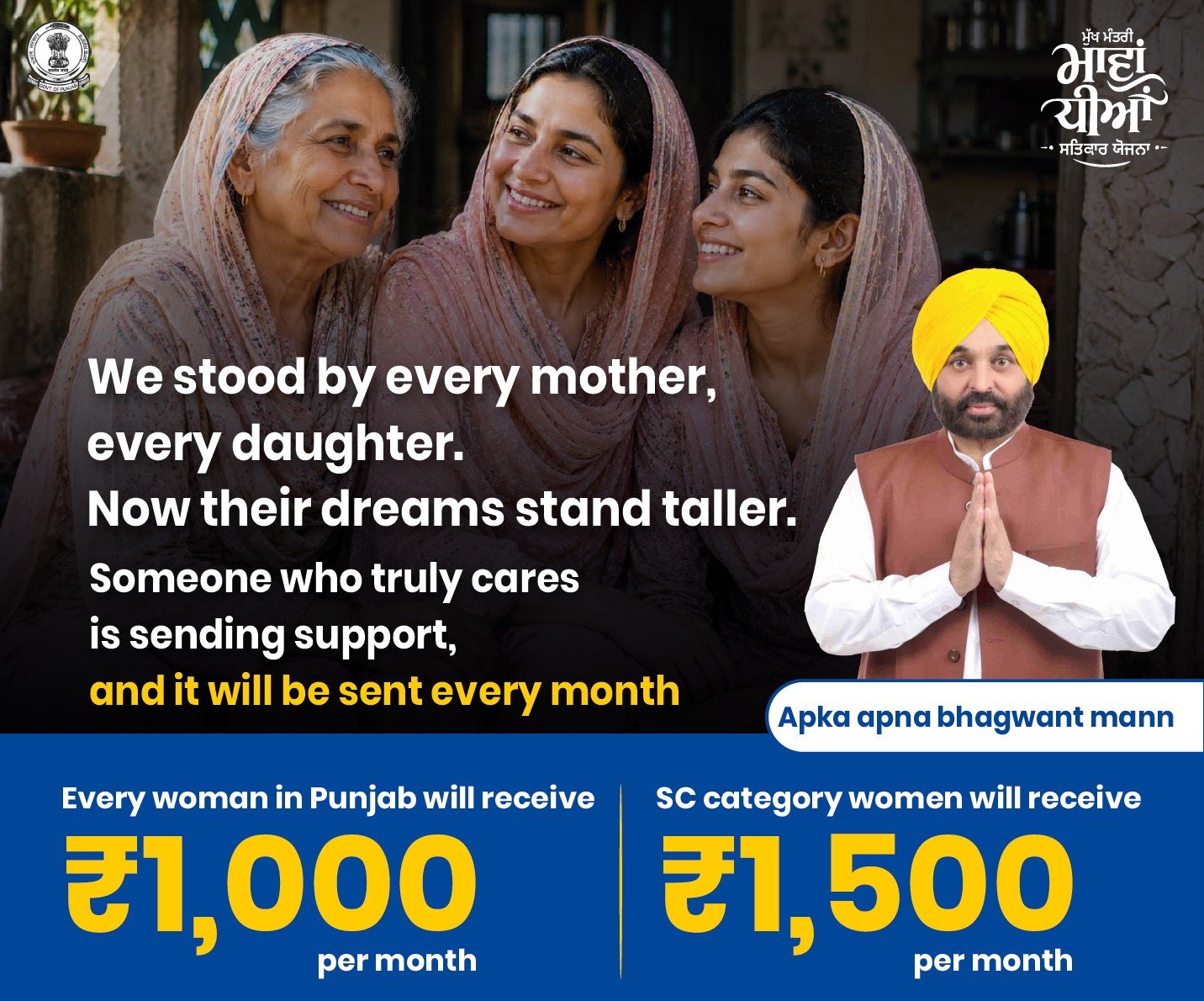
For Congress, the 2027 election is not simply a contest against Bhagwant Mann’s AAP government. It is a test of whether the party can reconstruct the broad-based coalition that once made it Punjab’s dominant political force.
The Hindu vote will be one part of that equation—not the entire equation, but an important one.
If Hindu voters increasingly feel that Congress has no influential leaders who represent their political concerns, the party risks allowing competitors to occupy that space permanently. Conversely, if Congress develops credible Hindu leadership while maintaining its traditional support among Sikh, Dalit, rural and other constituencies, it can strengthen its claim to being a genuinely statewide alternative.
Pargat Singh’s appointment gives the party a new starting point. But the harder task begins now.
With the Assembly election approaching, Punjab Congress has limited time to settle its internal disputes, rebuild its district organisations and demonstrate that every major social constituency has a meaningful place in the party.
The electoral question for Congress is no longer simply who will lead Punjab.
It is whether the party can once again persuade Punjab that it represents the whole state.