

Saptrishi Soni|
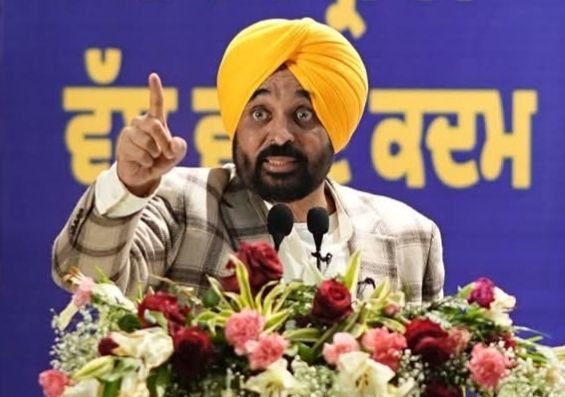
As Punjab approaches the February 2027 Legislative Assembly elections, the political atmosphere across the Malwa, Majha, and Doaba belts has entered a decisive phase. For the Aam Aadmi Party (AAP), which stormed to power in 2022 with an unprecedented mandate of 92 out of 117 seats, the coming months represent the ultimate test of incumbency. Following its electoral setback in Delhi in 2025, Punjab stands as AAP’s sole full-fledged state government and the primary laboratory for its governance model. Crucially, the political terrain shifted dramatically this week with the formal revival of the alliance between the Shiromani Akali Dal (SAD) and the Bharatiya Janata Party (BJP) after a six-year separation. Yet, as Chief Minister Bhagwant Singh Mann and party national convener Arvind Kejriwal sounded the poll bugle in Moga on 26 November—having already announced candidates for 71 constituencies across two lists—AAP’s leadership appears convinced that a deeply entrenched architecture of household welfare and agrarian outreach gives it a formidable edge at the ballot box.
The Architecture of Household Welfare
At the heart of AAP’s electoral strategy lies what political analysts describe as a “welfare fortress”—a suite of direct-benefit and public-service programmes designed to insulate household budgets against inflation while creating a sticky constituency of beneficiaries. The undisputed cornerstone of this model remains the 300 units of free monthly electricity (600 units per bi-monthly billing cycle) introduced in July 2022. For nearly four-and-a-half years, zero-rupee power bills have delivered tangible monthly savings to roughly 90 per cent of Punjab’s domestic consumers, transcending caste and regional divides.
In the run-up to the 2027 polls, the Mann administration has reinforced this baseline with high-impact social security expansions:
Mukh Mantri Mawan-Dheeyan Satkar Yojana: Fulfilling its flagship 2022 guarantee—albeit later in its term than originally promised, a delay the leadership attributes to inherited fiscal strain—the government has operationalised direct monthly cash transfers of ₹1,000 for eligible general-category women and ₹1,500 for Scheduled Caste women, disbursed in quarterly tranches of ₹3,000 and ₹4,500. Combined with free travel for women on state-run PRTC and PUNBUS buses, AAP is actively cultivating a decisive gender bloc, with Kejriwal explicitly urging women voters in Moga to mobilise male family members behind the party.
Healthcare and Education Overhaul: Moving beyond cash transfers, the government has established over 1,100 Aam Aadmi Clinics across urban wards and rural villages, offering free consultations, diagnostics, and essential medicines. This primary network is paired with the Mukh Mantri Sehat Yojana, providing cashless hospitalisation cover of up to ₹10 lakh per family annually. Simultaneously, the transformation of 117 government senior secondary institutions into Schools of Eminence, alongside the recruitment of more than 70,000 youth into government service on a merit-based, non-bribery model, anchors AAP’s pitch to aspirational lower-middle-class families.
Citizen-Centric Governance: Initiatives such as the **Sadak Surakhya Force (SSF)—a dedicated highway patrolling unit that has significantly reduced road fatalities—and the
Farishtey scheme guaranteeing free “golden hour” trauma care for accident victims have added administrative credibility to AAP’s governance record.
Agrarian Outreach: Canal Water, Daytime Power, and Price Support
In a state where rural constituencies dictate electoral outcomes, AAP’s survival hinges on keeping Punjab’s peasantry onside. Over the past five years, the Mann government has pivoted toward addressing structural agrarian pain points rather than relying solely on rhetoric:
1. Revival of the Canal Network: Historically, tail-end villages across the Malwa belt depended heavily on expensive diesel-run tubewells due to silted and defunct distributaries. Through a sustained infrastructure push—constructing and restoring over 33,000 kilometres of watercourses and underground pipelines alongside fresh projects worth over ₹100 crore announced in November 2026—the state has dramatically expanded surface irrigation, helping arrest groundwater depletion while lowering input costs for cultivators.
2. Uninterrupted Daytime Power and Crop Compensation: By acquiring the Goindwal Sahib thermal power plant and augmenting generation capacity, the state has largely eliminated nocturnal irrigation shifts, providing farmers with reliable, uninterrupted daytime electricity. Furthermore, when unseasonal rains and hailstorms damaged standing crops, the administration raised crop-loss relief to ₹15,000 per acre for losses exceeding 75 per cent, while extending compensatory relief to landless agricultural labourers.
3. Remunerative Pricing and Farmer Welfare: Just days ago, the government hiked the State Agreed Price (SAP) for sugarcane to ₹431 per quintal, the highest in India, while ensuring timely mill crushing. Earlier, the state also disbursed ₹5 lakh financial assistance and government employment to the next of kin of farmers who lost their lives during the 2020–21 agricultural agitation.
Winning Scope and Probabilities in a Realigned Arena
How do these policy dividends translate into electoral probabilities for February 2027? In the May 2026 urban local body elections across 105 municipal institutions, AAP demonstrated formidable organisational depth, capturing 954 of 2,019 wards with a 48.46 per cent popular vote share, well ahead of the Congress (20.08 per cent), SAD (9.71 per cent), and BJP (8.70 per cent).
However, the political landscape entering December 2026 is markedly more competitive than in May. The reunion of the SAD and BJP alters the opposition arithmetic by consolidating traditional rural Akali bases with urban Hindu votes—potentially pooling a combined vote share north of 25 to 27 per cent if seamless vote transfer occurs on the ground. Simultaneously, the Indian National Congress retains a resilient 20–23 per cent vote floor and is aggressively targeting anti-incumbency sentiment over rural debt, lingering agitation by contractual employees and teachers, and perceptions of law-and-order challenges.
Despite these headwinds, AAP enters the 2027 campaign as the clear frontrunner, albeit with a narrower margin than its historic 2022 landslide. Its winning probability rests on two structural advantages: first, a three-way contest between AAP, the Congress, and the SAD-BJP combine splits anti-incumbency votes to the ruling party’s benefit; second, AAP’s core campaign narrative—warning voters that an opposition return would dismantle free electricity, women’s monthly stipends, and ₹10 lakh health cover—creates a powerful material incentive for beneficiary households to stick with the incumbent. Ultimately, while the 2027 verdict is unlikely to replicate the 92-seat wave of 2022, AAP’s deeply embedded welfare delivery and rural irrigation push position Bhagwant Mann with a realistic, well-fortified path to securing a historic second consecutive mandate in Punjab.