Saptrishi Soni
The fog that descends upon the historic grounds of Sri Muktsar Sahib in mid-January is usually pierced only by the hymns of gurbani and the vibrant colours of devotees’ turbans. Yet, at the Maghi Mela of 2026, the winter air carried a different charge—the electric, undeniable static of election fever. While the sacred sarovar remained the spiritual anchor for lakhs of pilgrims immersing themselves to honour the Forty Liberated Ones (Chali Mukte), the dusty grounds just beyond the shrine transformed into the inaugural battleground for the 2027 Punjab Assembly elections. This was no ordinary religious congregation; it was, by all accounts, the sounding of the poll bugle in a state restless for direction.
For the political observer, the 2026 Maghi Mela offered a rare, panoramic view of a shifting landscape. The stark bipolarity that once defined Punjab’s politics—the pendulum swing between the Congress and the Akali Dal—has thoroughly fractured. In its place stands a chaotic, high-stakes multipolar arena where survival, revival, and dominance are being contested with unprecedented ferocity. The rhetoric flying from the stages this year confirmed that the “Malwa Belt,” the state’s largest political reservoir, remains the prize everyone is desperate to capture.
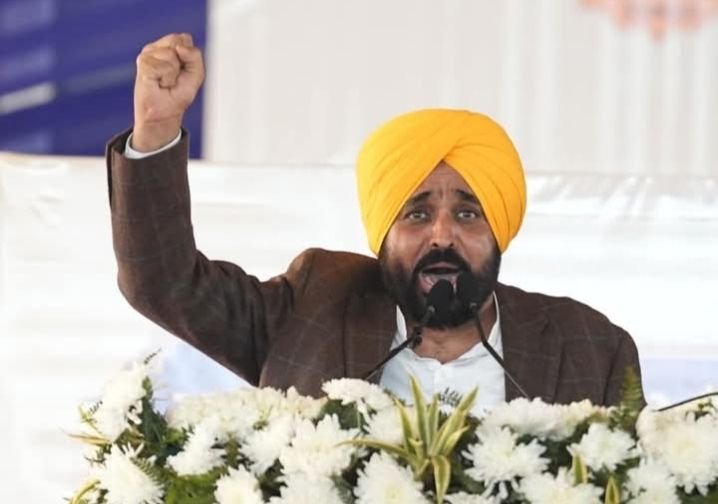
The ruling Aam Aadmi Party (AAP), returning to the Maghi stage after a noticeable hiatus, displayed a strategy clearly designed to counter the weight of anti-incumbency. Chief Minister Bhagwant Mann’s rallying cry of “Ik Mauka Hor” (One More Chance) was not just a slogan but a defensive manoeuvre. By intertwining the memory of revolutionary martyrs with his government’s “Rangla Punjab” narrative, Mann attempted to insulate his administration from accusations of remote-controlled governance. His announcement of a ₹1,000 monthly allowance for women was a direct play to consolidate the female electorate, a demographic that has proven decisive in recent Indian elections. However, the urgency in his tone betrayed the pressure of defending a four-year track record against an opposition that smells blood.
On the other side of the spectrum, the Shiromani Akali Dal (SAD) approached the Mela with the gravity of an existential crisis. For Sukhbir Singh Badal, the crowds at Muktsar were not just voters but the remnants of a “Panthic” base that the party must reclaim to survive. The Akali narrative was dark and historical, framing the current political moment as a struggle against “outsiders” and “invaders”—a thinly veiled attack on AAP’s Delhi origins. By promising to shut the Rajasthan Feeder canal and reserving jobs for locals, the SAD attempted to pivot the conversation back to regional nationalism, a card that has historically served them well when the party’s back is against the wall.
Perhaps the most disruptive element at this year’s Mela was the aggressive debut of the Bharatiya Janata Party (BJP). No longer content to ride in the sidecar of a regional ally, the BJP’s independent conference signaled a brazen attempt to carve out a new constituency in rural Punjab. Leaders like Ravneet Singh Bittu and the visiting Haryana Chief Minister Nayab Singh Saini pitched a “Double Engine” dream, contrasting Punjab’s economic stagnation with the apparent prosperity of its neighbours. Their presence was a calculated gamble to bypass the traditional rural anger against the party by offering a direct transactional relationship with the central government’s power and funds.
Amidst this cacophony, the Congress’s decision to abstain from a formal conference during the religious days stood out as a strategic silence. By adhering to the Akal Takht’s moral edict, the party sought to occupy the moral high ground, positioning itself as the only dignified player in a “circus” of opportunists. Whether this will be read by the voters as piety or passivity remains the key question.
As the tents are dismantled and the pilgrims return to their villages, the message from Muktsar is unambiguous. The grace period for the current government is over, the traditional guards are fighting for their lives, and new challengers are knocking down the door. The Battle of Khidrana was won with swords three centuries ago; the battle for 2027 will be fought with narratives, and the first volley has officially been fired.
Public Reaction and Sentiment Synthesis
The aftermath of the political conferences has triggered a wave of reactions across Punjab’s social strata, reflected in editorials, social media discourse, and ground-level chatter.
The “Freebie” Fatigue vs. Necessity: Public sentiment regarding AAP’s promise of ₹1,000 for women is deeply divided. While a significant section of the beneficiary demographic has welcomed the move as necessary social security, economic analysts and urban voters have expressed skepticism on social media, questioning the fiscal viability of the state’s already burdened exchequer. The “Ik Mauka Hor” slogan has trended, but often accompanied by questions about undelivered promises from 2022.
Skepticism on the “Panthic” Revival: The Akali Dal’s aggressive regionalism has resonated with its core rural voters, particularly the promise regarding river waters. However, editorial columns suggest that the wider electorate remains cautious, waiting to see if the party’s “repentance” for past mistakes is genuine or merely electoral posturing. The turnout at the SAD rally was high, which analysts note is a sign of a recovering cadre, even if it hasn’t translated to vote-share confidence yet.
Curiosity Regarding the BJP: The BJP’s “Double Engine” pitch has generated significant curiosity, particularly among the urban trading class and distinct pockets of the rural electorate disillusioned with the traditional parties. However, Ravneet Bittu’s speeches drew sharp reactions online, with many users criticizing the comparison to Haryana as an insult to Punjab’s pride, while others acknowledged the bitter truth of the economic disparity.
The “Silent” Congress: The Congress party’s decision to skip the conference has received mixed reviews. Religious bodies and purists have praised the move as respectful to the sanctity of the *Chali Mukte*. However, political strategists argue that in the noise of Maghi, silence can be mistaken for irrelevance, fearing the party may have ceded the initial momentum to its rivals.