

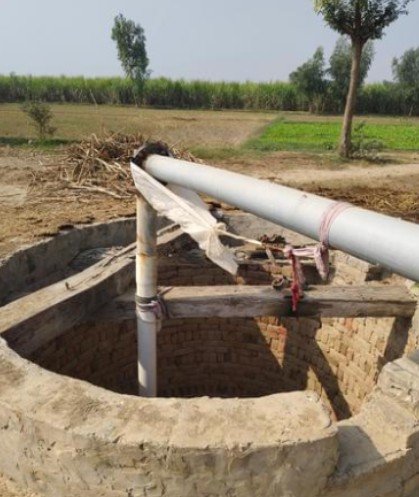
Chandigarh : Punjab’s long-simmering groundwater crisis has returned to the centre of political discourse after Rajya Sabha Member of Parliament Vikramjit Singh Sahney revealed that nearly 42 per cent of the state’s groundwater wells are now classified as over-exploited or critically depleted. The disclosure has triggered sharp political reactions across party lines, exposing deep concerns over environmental sustainability, agricultural policy, and the future economic stability of one of India’s most agrarian states.
Addressing the issue through public statements and parliamentary interventions, MP Sahney described the situation as an “environmental and economic emergency” that can no longer be addressed through piecemeal solutions. He warned that Punjab, once celebrated as the backbone of India’s Green Revolution, is now paying the price for decades of unsustainable water use, crop monoculture, and policy inertia. His remarks have ignited renewed debate on the responsibility of both the state and central governments in addressing the crisis.
Groundwater depletion in Punjab is not a new phenomenon, but its scale has become increasingly alarming. Experts point out that excessive dependence on water-intensive crops such as paddy, coupled with free or highly subsidised electricity for agriculture, has led to unchecked extraction of groundwater over several decades. According to hydrogeologists, the water table in several districts is falling by more than half a metre annually, pushing farmers deeper into debt as they are forced to drill borewells at greater depths.
Politically, the issue has exposed fault lines between the ruling Aam Aadmi Party (AAP) government in Punjab and opposition parties, as well as between the state and the Centre. Sahney urged the Union government to treat Punjab’s groundwater depletion as a national concern rather than a regional problem, arguing that the state’s agricultural output directly affects India’s food security. He called for a comprehensive central-state partnership to fund crop diversification, promote micro-irrigation, and incentivise farmers to shift away from water-intensive cultivation.
The Punjab government, while acknowledging the severity of the crisis, has defended its efforts to address the issue. Officials from the state’s agriculture and water resources departments point to ongoing initiatives promoting maize, pulses, and oilseeds as alternatives to paddy. The government has also highlighted pilot projects aimed at encouraging direct seeding of rice and drip irrigation to reduce water consumption. However, critics argue that these measures remain limited in scope and lack the scale needed to reverse decades of ecological damage.
Opposition parties, including the Congress and Shiromani Akali Dal, have seized on Sahney’s remarks to criticise the AAP government’s environmental record. They accuse the ruling party of relying more on populist rhetoric than structural reforms, particularly on the sensitive issue of power subsidies for farmers. Opposition leaders argue that without a serious rethinking of Punjab’s agricultural model, groundwater depletion will continue regardless of incremental policy tweaks.
The crisis also has significant socio-economic implications. Rural communities are increasingly vulnerable as declining water levels raise cultivation costs and reduce crop yields. Small and marginal farmers are hit the hardest, often lacking the resources to invest in alternative technologies or crops. Environmental economists warn that unchecked groundwater depletion could lead to widespread farm distress, increased rural unemployment, and accelerated migration from villages to cities.
Beyond agriculture, the depletion of groundwater poses risks to drinking water security and public health. Several districts have already reported contamination issues linked to excessive extraction, including higher concentrations of arsenic and other harmful substances. Public health experts caution that water scarcity and contamination could strain Punjab’s healthcare system and exacerbate existing inequalities between urban and rural areas.
Sahney’s intervention has also sparked debate in national policy circles, with calls for aligning Punjab’s water management strategy with broader climate resilience goals. Environmentalists argue that groundwater conservation must be integrated into India’s climate adaptation framework, particularly as changing rainfall patterns and rising temperatures place additional stress on water resources.
As political leaders trade blame and propose solutions, there is growing consensus among experts that the crisis demands urgent, coordinated action. Long-term solutions, they say, will require not only policy reforms and financial investment but also behavioural change at the grassroots level. Farmers, policymakers, and consumers alike will need to rethink entrenched practices that prioritise short-term gains over long-term sustainability.
For Punjab, the groundwater debate is no longer just an environmental issue; it has become a defining political challenge. How effectively the state and Centre respond in the coming years may determine not only the future of Punjab’s agriculture but also the credibility of governments claiming to balance development with environmental responsibility.