
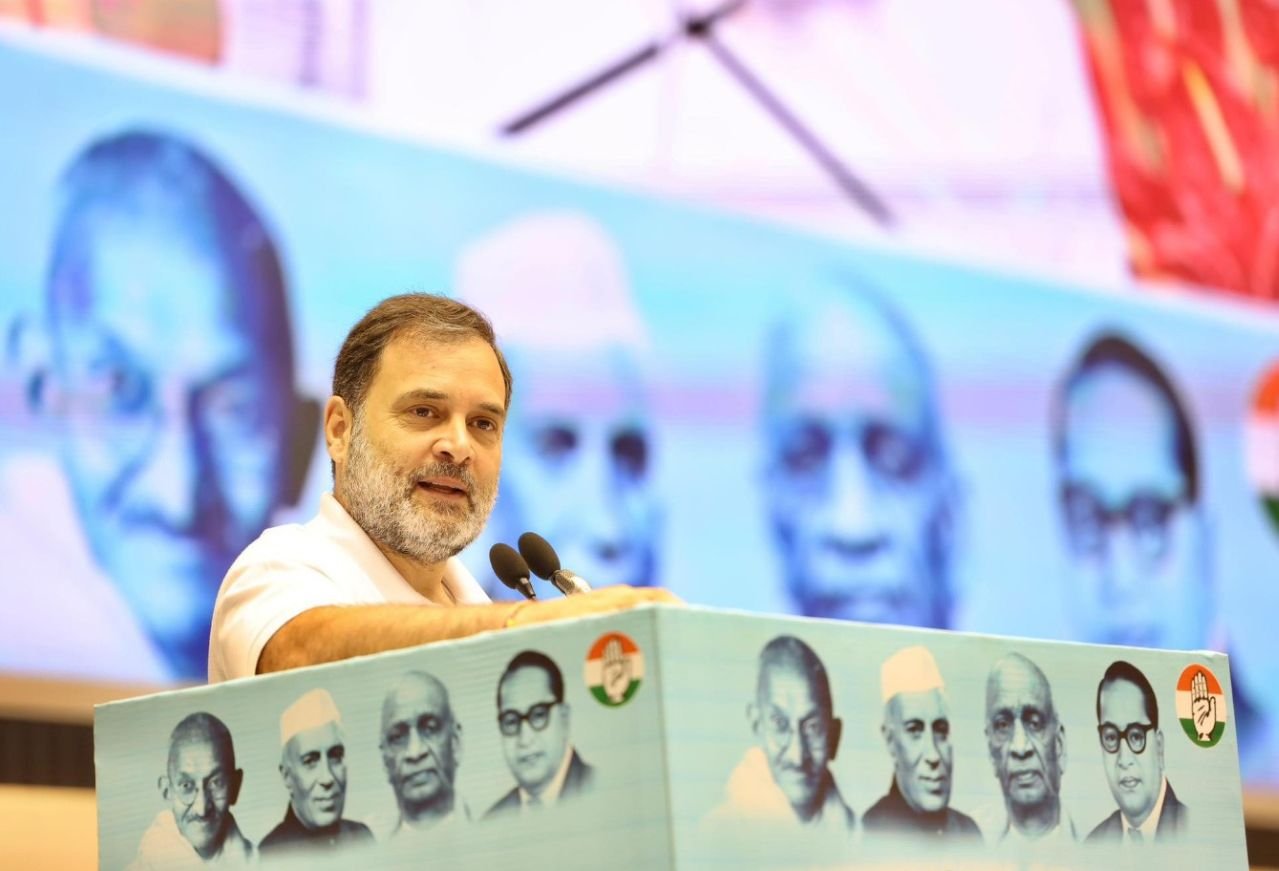
India’s long-debated women’s political representation reform has once again taken centre stage, as the Indian National Congress has issued a strict three-line whip to its Lok Sabha members ahead of a crucial parliamentary sitting where amendments to the Women’s Reservation Act are expected to be discussed and voted upon.
The move signals the growing political weight of the legislation, formally known as the Nari Shakti Vandan Adhiniyam, which seeks to reserve 33 percent of seats for women in the Lok Sabha and state legislative assemblies. With the Budget Session extended and a special three-day sitting scheduled from April 16 to 18, the stage is set for a decisive phase in the law’s implementation roadmap.
In its directive, the Congress leadership has made attendance mandatory for all its MPs throughout the proceedings, underlining that “very important issues” will be taken up for discussion and voting. The issuance of a three-line whip—one of the strictest forms of party instruction—indicates that the party views the upcoming debate not just as routine legislative business, but as a politically sensitive moment that could shape national discourse ahead of future elections.
The proposed amendments are expected to address the timeline and modalities of implementing the Women’s Reservation Act, with indications that its provisions may come into force by 2029. This delayed rollout has already become a point of contention between political parties, with opposition groups questioning the gap between legislative approval and actual implementation.
For the Congress, the whip serves a dual purpose. On one hand, it ensures numerical discipline within the House during a potentially tight vote. On the other, it allows the party to project a unified stance on women’s empowerment—an issue that carries both social and electoral significance. The party has historically advocated for greater female representation in politics, and its current positioning aims to reinforce that legacy.
The broader political context adds further complexity. The ruling Bharatiya Janata Party has also championed the Women’s Reservation Act as a landmark reform, creating a rare instance of broad political consensus in principle. However, differences remain over execution, timing, and intent, with opposition parties arguing that the delay in implementation dilutes the immediate impact of the legislation.
The special parliamentary sitting is expected to witness intense debate, not only on the technical aspects of the amendments but also on the political messaging surrounding the bill. Questions around delimitation, census-linked implementation, and the practical challenges of seat reservation are likely to dominate discussions.
Beyond Parliament, the issue resonates deeply with India’s electorate. Women constitute a significant and increasingly influential voter base, and their participation in elections has steadily risen over the years. Yet, their representation in legislative bodies remains disproportionately low. The Women’s Reservation Act, if effectively implemented, could mark a structural shift in Indian politics by opening doors for a new generation of female leaders.
Political observers note that the coming days could prove निर्णायक in determining whether the bill transitions from symbolic legislation to actionable reform. The Congress’s decision to enforce strict attendance reflects the high stakes involved, as parties seek to align themselves with a measure that carries both moral weight and electoral relevance.
As Parliament convenes for this special session, the focus will not only be on legislative outcomes but also on the broader narrative each party seeks to build—whether as champions of gender justice or as critics of delayed reform. In either case, the Women’s Reservation Bill is set to remain a defining issue in India’s political landscape in the years leading up to its proposed implementation.