
A sharp war of words between Mamata Banerjee and Suvendu Adhikari set the tone for an intense and closely watched phase of the West Bengal Assembly Elections, as voters turned out in large numbers across key constituencies. The two rival leaders briefly came face-to-face in the Bhabanipur constituency, exchanging allegations that underscored the deep political divide between the Trinamool Congress and the Bharatiya Janata Party.
The confrontation highlighted the high political stakes attached to this round of polling, where prestige battles and narrative control have become as critical as the electoral outcome itself. Bhabanipur, in particular, emerged as a focal point, reflecting not just a constituency-level contest but a symbolic clash between two dominant political forces vying for supremacy in the state.
Amid this charged atmosphere, voter participation remained robust. By early afternoon, more than sixty percent of the approximately 3.21 crore electorate had exercised their franchise, with districts such as Purba Bardhaman reporting the highest turnout. As polling progressed, participation continued to climb steadily, crossing the seventy-eight percent mark by mid-afternoon, indicating strong public engagement despite sporadic disruptions.
However, the polling process was not without incidents. Reports of clashes, vandalism, and protests surfaced from multiple districts, including South 24 Parganas, Nadia, and Howrah. In some areas, tensions escalated into physical confrontations between rival party workers, while technical glitches in electronic voting machines briefly slowed down the process at select booths. Authorities responded by deploying additional security personnel and addressing complaints to ensure polling continued with minimal disruption.
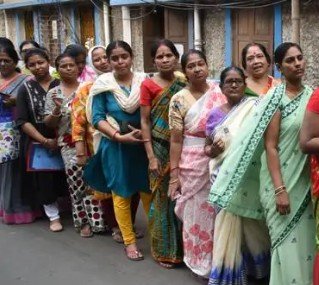
Across 142 constituencies, long queues outside polling stations reflected a determined electorate, even as localised tensions persisted. The Election Commission maintained that the overall process remained under control, with swift interventions helping to contain disturbances.
For the Bharatiya Janata Party, this phase represents a critical opportunity to expand its footprint in a state where the Trinamool Congress has historically maintained a stronghold. In the previous assembly elections, the ruling party secured a commanding position with over 120 seats, setting a high benchmark for its challengers. The BJP, however, has intensified its campaign, aiming to convert voter dissatisfaction and political momentum into electoral gains.
On the other side, the Trinamool Congress is seeking to consolidate its base by projecting governance continuity and regional identity as central themes. Mamata Banerjee’s direct engagement in high-profile constituencies signals the party’s intent to defend its dominance against an aggressive opposition campaign.
The unfolding contest reflects a broader national political narrative, where regional parties and national forces are locked in increasingly competitive battles. With high voter turnout and heightened political rhetoric, the outcome of this electoral phase is expected to play a decisive role in shaping the state’s political trajectory in the coming years.