
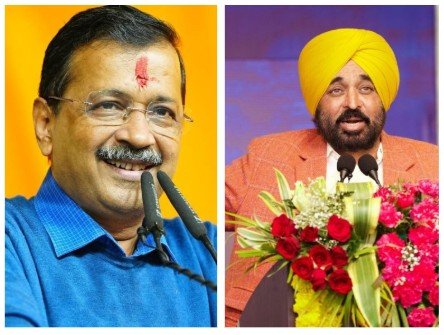
The exit of Raghav Chadha along with several Members of Parliament has triggered one of the most serious internal crises for the Aam Aadmi Party in recent years, forcing the leadership to shift into urgent damage-control mode. What began as internal dissent has now evolved into a full-scale political challenge, raising concerns about organisational stability, leadership cohesion, and electoral preparedness—particularly in Punjab, the party’s most significant state outside Delhi.
In a decisive attempt to contain the fallout, senior leader Manish Sisodia has stepped to the forefront, taking charge of efforts to stabilise the party structure and restore confidence among legislators and grassroots workers. A crucial strategy meeting has been convened in Jalandhar on April 29, bringing together a wide spectrum of party representatives at a time when unity is being tested.
The meeting is expected to be attended by Bhagwant Singh Mann, along with nearly all party legislators in Punjab, a large number of organisational observers, and key functionaries from various wings of the party. The scale of participation reflects the seriousness of the situation, with leadership aiming to send a clear message of cohesion after weeks of political turbulence.
Party insiders suggest that the developments surrounding Chadha’s departure have not only weakened the parliamentary strength of the party but also dented its public perception as a disciplined and ideologically driven political force. The situation has been further complicated by narratives emerging from rival parties, portraying the episode as evidence of internal fragmentation and leadership disconnect.
Against this backdrop, the Jalandhar बैठक is being positioned as a turning point. The leadership is expected to engage in direct dialogue with legislators and organisational representatives to assess ground realities, gather feedback, and address concerns that may have contributed to the unrest. Rebuilding trust within the ranks and reinforcing the party’s core messaging are seen as immediate priorities.
Sisodia’s re-emergence as a central figure in crisis management is particularly significant. Known for his organisational acumen and strategic clarity, he is expected to play a key role in recalibrating the party’s approach, especially in Punjab where governance performance and political narrative will be closely scrutinised ahead of future elections.
At a broader level, the crisis has exposed structural vulnerabilities within the party, including the challenges of managing rapid expansion, balancing central leadership with regional dynamics, and maintaining ideological consistency amid political pressures. Analysts believe that how the party responds in the coming weeks will determine whether it can recover its footing or face a prolonged phase of instability.
The leadership is also expected to focus on boosting morale among workers, many of whom have been unsettled by recent developments. By reinforcing internal communication and reaffirming commitment to governance and public service, the party hopes to shift the narrative away from internal discord.
As the political landscape becomes increasingly competitive, the Aam Aadmi Party now finds itself at a critical juncture. The outcome of its internal corrective measures—starting with the Jalandhar meeting—will not only shape its immediate future in Punjab but also influence its national ambitions.