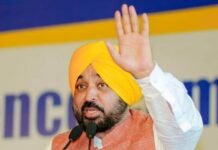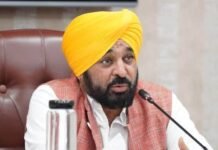
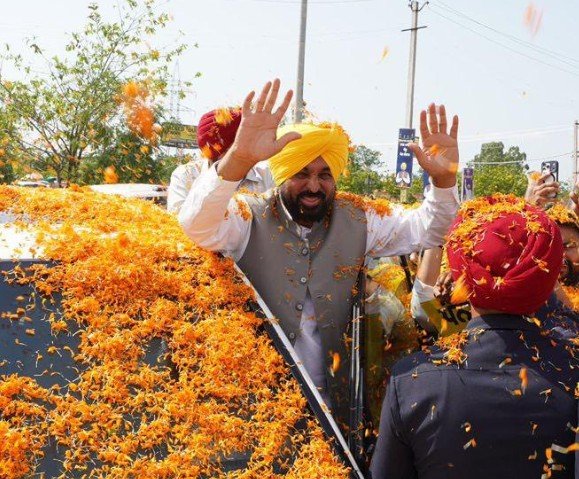
Punjab Chief Minister Bhagwant Mann on Tuesday launched a sharp political attack on the Bharatiya Janata Party, accusing it of treating Punjab with bias and asserting that the party has little electoral relevance in the state. Addressing the media, Mann said that while the BJP may register victories elsewhere in the country, its prospects in Punjab remain limited due to what he described as a history of neglect and strained relations with the people of the state.
He argued that public sentiment in Punjab continues to be shaped by memories of the farmers’ protests against the now-repealed agricultural laws, during which a large number of farmers lost their lives. According to the Chief Minister, these events have left a lasting imprint on the collective consciousness of the state, influencing political perceptions and electoral behavior.
Mann also accused the BJP of consistently undermining Punjab’s interests, citing disputes over institutions and resources, including control over key assets and the allocation of financial grants. He alleged that such actions have hindered the state’s development and reinforced the perception of unequal treatment.
Dismissing the BJP’s ambitions in Punjab, the Chief Minister said the party’s leadership was disconnected from the realities on the ground and had failed to address core state-specific concerns. He added that the electorate in Punjab is politically aware and unlikely to support a party that, in his view, has not effectively represented their interests.
Alongside his political remarks, Mann outlined a series of governance initiatives undertaken by his administration, placing particular emphasis on healthcare reforms. He said that nearly 1,000 neighborhood clinics are operational across the state, offering free medical consultations, essential medicines, and diagnostic services. These facilities, he added, have significantly increased access to primary healthcare, with patient footfall running into millions.
The Chief Minister also highlighted a new universal healthcare initiative designed to provide cashless treatment of up to ₹10 lakh per family. He described the scheme as a landmark effort to reduce the financial burden of medical expenses while ensuring access to quality healthcare services for all residents.
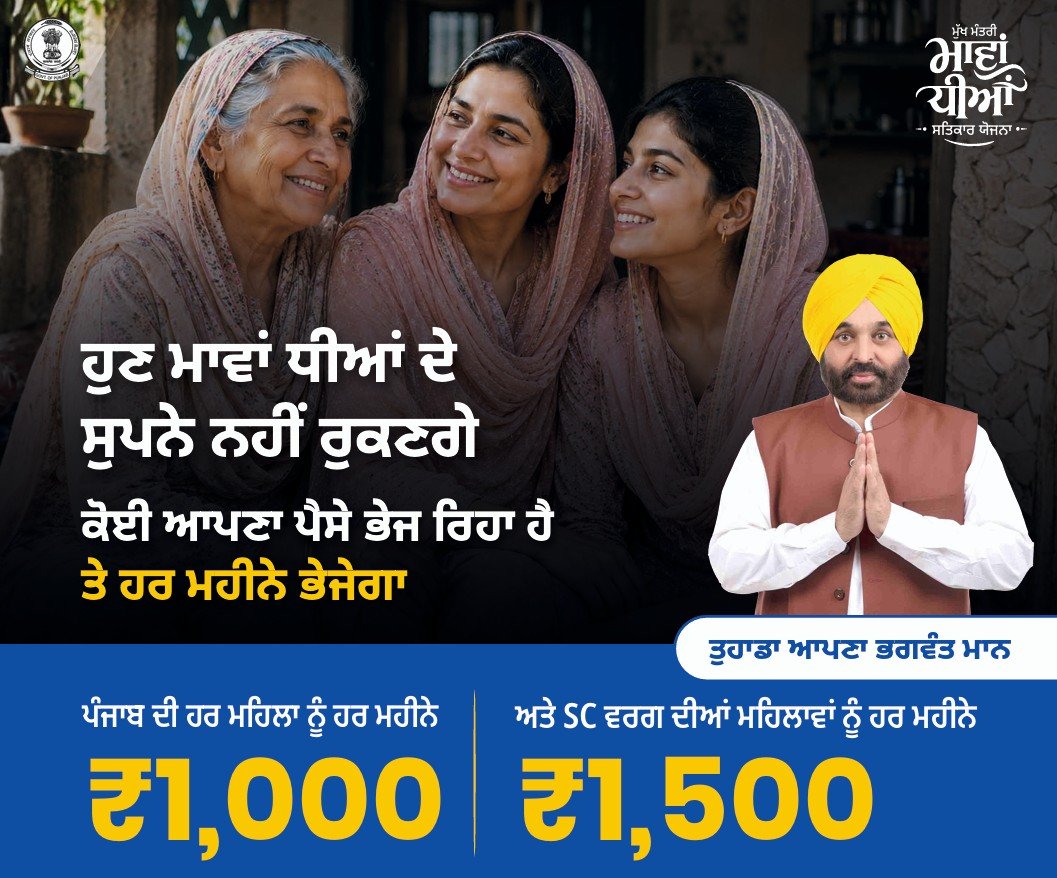
Turning to social welfare, Mann spoke about a financial assistance program aimed at supporting women across the state, under which eligible beneficiaries receive direct monthly transfers. He said the scheme is expected to cover a large proportion of the female population and represents a major step toward economic empowerment.
In the agriculture sector, the Chief Minister pointed to investments in irrigation infrastructure, including an extensive canal and pipeline network intended to improve water availability for farmers. He noted that measures have also been taken to recharge water sources and stabilize groundwater levels, addressing long-term sustainability concerns in an agrarian economy.
Mann further highlighted achievements in infrastructure development, employment generation, and energy policy. He stated that a majority of households are benefiting from free electricity, while tens of thousands of jobs have been created through what he described as a transparent recruitment process. He also referenced efforts to reduce public expenditure and improve road connectivity across the state.
On education, the Chief Minister said that students from government schools are showing improved performance in competitive examinations, attributing this to reforms aimed at strengthening the quality of public education. He also emphasized uninterrupted power supply for agricultural needs, particularly during critical crop seasons, as a key intervention supporting farmers.
Criticizing traditional political parties, Mann said that voters have increasingly moved away from established leadership that, in his view, failed to deliver on promises. He suggested that a shift in public expectations has led to a new political landscape in which governance performance plays a central role.
Addressing issues of accountability, he referred to legislative measures introduced to ensure strict action against incidents of religious sacrilege. He said the government is committed to enforcing these provisions rigorously, underlining the importance of preserving religious respect and social harmony.
The Chief Minister also announced a religious outreach initiative, including a multi-day pilgrimage program across major Sikh shrines, as part of efforts to express gratitude and connect with spiritual traditions. In addition, he spoke about ongoing commemorations marking significant anniversaries associated with revered spiritual figures, stating that these events would be observed with global participation.
Concluding his remarks, Mann said his government remains focused on delivering inclusive development, strengthening public institutions, and ensuring that state resources are directed toward the welfare of its people.