The announcement that upcoming municipal elections in Punjab will be conducted through ballot papers instead of Electronic Voting Machines (EVMs) has sparked a sharp political confrontation between the ruling Bhagwant Mann-led Aam Aadmi Party government and the opposition Bharatiya Janata Party.
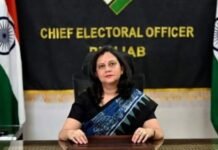
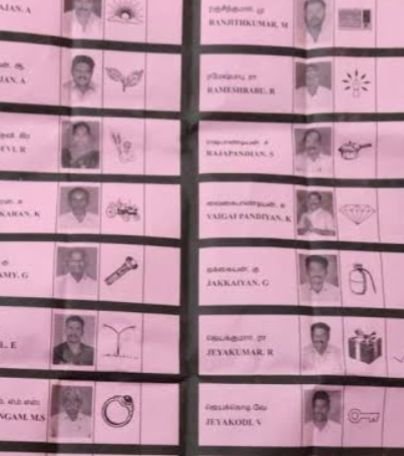
The controversy erupted soon after the Punjab Election Commission indicated that the civic body polls would be held using traditional ballot papers, reviving an old political debate over transparency, electoral trust and voting systems in India. The decision immediately drew objections from the Punjab BJP leadership, which questioned the timing and intent behind the move.
A delegation led by Sunil Jakhar met the State Election Commissioner and urged the poll body to continue with EVM-based voting, arguing that municipal elections in the state had previously been conducted using electronic machines. BJP leaders claimed that shifting back to ballot papers at a politically sensitive time had raised serious concerns among opposition parties.
The BJP alleged that the ruling AAP government was uncomfortable about its electoral prospects in urban Punjab and was therefore attempting to create conditions that could influence counting and result management during the manual tabulation process. Party leaders also questioned why political parties were allegedly not consulted before the decision was finalised.
The issue has now evolved into a broader political battle over electoral credibility. Ironically, several opposition parties at the national level have, in the past, repeatedly accused the BJP of benefiting from or influencing elections through EVMs. In Punjab, however, the political narrative has sharply reversed, with the BJP now defending EVM-based voting while the ruling AAP government argues that ballot papers ensure greater transparency and public confidence.
Responding to BJP’s criticism, Punjab Finance Minister Harpal Singh Cheema accused the BJP of attempting to divert public attention from its organisational weakness in the state. He claimed that the opposition was struggling to find strong candidates for several civic seats and was now trying to politicise an administrative election process.
Cheema maintained that the decision to conduct elections through ballot papers was aimed at ensuring transparency and smooth electoral management. According to the ruling party, the opposition’s objections are politically motivated and intended to create confusion ahead of polling.
Election authorities have meanwhile defended the process, stating that preparations are already underway for ballot-based polling across urban local bodies. The State Election Commission has reportedly arranged around 4,200 ballot boxes, including reserve units, to ensure sufficient availability at all polling stations.
Officials also clarified that under the Punjab Municipal Elections Rules, 1994, conducting elections through ballot papers remains legally valid, especially in circumstances where machines are unavailable or alternative arrangements are deemed appropriate.
The political significance of the controversy goes beyond municipal governance. Punjab’s civic polls are increasingly being viewed as an important test of political momentum ahead of future Assembly and parliamentary battles. Urban local body elections in the state often shape political narratives, cadre morale and alliance strategies for larger electoral contests.
Political analysts believe the debate surrounding ballot papers versus EVMs reflects a deeper crisis of trust between political parties and electoral processes across India. While one side argues that manual voting offers greater visibility and transparency, the other claims that ballot systems may increase the risk of disputes during counting and result compilation.
The controversy is also expected to intensify campaign rhetoric in the coming days, with both BJP and AAP likely to use the issue to consolidate their respective support bases in urban Punjab. As election preparations gather pace, the focus is now shifting from civic governance alone to a larger political battle over credibility, transparency and control of the electoral narrative in the state.