
A fresh constitutional and political confrontation has emerged between the Punjab government and the Centre following the appointment of Justice Ashwani Kumar Mishra as the new Chief Justice of the Punjab and Haryana High Court.
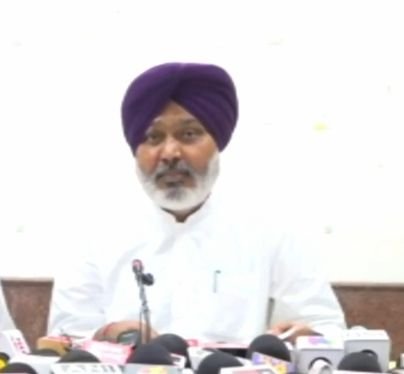
The Bhagwant Mann-led Punjab government has strongly objected to the manner in which the appointment was notified, with Finance Minister Harpal Singh Cheema alleging that the state government was not consulted and that established procedures concerning the appointment were ignored.
Cheema described the issue as “serious and sensitive” and said the manner in which the appointment was made raises fundamental questions about Punjab’s constitutional rights and India’s federal structure. He also accused the BJP-led Union government of using its authority in a manner that, according to him, undermines the interests of Punjab.
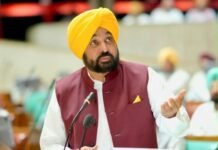
The Punjab government has now decided to examine the matter at the highest level. Chief Minister Bhagwant Mann has convened an emergency meeting of the state Cabinet on Sunday evening, with the appointment expected to be the principal issue on the agenda. The meeting is being held through video conferencing, with ministers reportedly asked to participate from the offices of their respective Deputy Commissioners because several are not in Chandigarh.
Why the appointment has triggered a political controversy
Justice Ashwani Kumar Mishra’s appointment itself is not sudden. He had been functioning as the Acting Chief Justice of the Punjab and Haryana High Court since June this year, following the elevation of Justice Sheel Nagu, the then Chief Justice, to the Supreme Court.
The Supreme Court Collegium, headed by Chief Justice of India Surya Kant, recommended Justice Mishra’s elevation as the regular Chief Justice at its meeting on August 6. The Union government subsequently notified his appointment on September 5.
The controversy, therefore, is primarily about the process rather than Justice Mishra’s judicial credentials.
Cheema has alleged that the Punjab government was not given an opportunity to place its views before the appointment was finalised. He has argued that ignoring the state’s position amounts to an affront to Punjab’s constitutional standing and raises broader questions about Centre-state relations.
The Punjab government is expected to examine the constitutional and legal dimensions of the issue at Sunday’s Cabinet meeting before deciding its next course of action.
Who is Justice Ashwani Kumar Mishra?
Justice Mishra is an experienced judge who has previously served at the Allahabad High Court. He was born on November 16, 1968, completed his BA (Honours) in Economics from Kirori Mal College, Delhi University, and obtained his law degree from the Campus Law Centre, University of Delhi.
He enrolled as an advocate in May 1993 and practised primarily in civil, constitutional and service matters. He was designated a Senior Advocate in 2013 and was elevated as an Additional Judge of the Allahabad High Court in February 2014. He became a permanent judge in February 2016.
Justice Mishra served at the Allahabad High Court until July 2025 before being transferred to the Punjab and Haryana High Court, where he took oath on July 21, 2025. Following Justice Sheel Nagu’s elevation to the Supreme Court, Justice Mishra was appointed Acting Chief Justice under Article 223 of the Constitution in June 2026.
His elevation as the regular Chief Justice therefore represents the formal continuation of a responsibility he has already been performing for several months.
The larger federalism question
The Punjab government’s objection has opened up a much larger debate over the relationship between the Union government, state governments and the judiciary.
Chief Justice appointments to High Courts involve a constitutional process in which the Supreme Court Collegium plays a central role in recommending judges for elevation, while the Union government processes and formally notifies appointments. The Constitution also provides for the appointment of Acting Chief Justices under Article 223, as was done in Justice Mishra’s case in June.
Punjab’s present objection, however, centres on whether the elected state government was adequately heard or consulted before the latest appointment was finalised.
That distinction will be crucial in the political and constitutional debate that is now likely to follow.
The Mann government is expected to consider whether there are formal avenues available to raise its concerns, what correspondence took place between the Centre and the state, and whether the state can seek clarification on the procedure that led to Justice Mishra’s appointment.
Another Centre-Punjab flashpoint
The development comes against the backdrop of an already strained relationship between the AAP government in Punjab and the BJP-led government at the Centre.
Chief Minister Bhagwant Mann and his ministers have repeatedly accused the Centre of interfering in matters concerning Punjab’s interests, while the Union government and the BJP have frequently rejected such allegations.
The latest dispute could therefore acquire significance beyond the immediate question of a judicial appointment.
For the Mann government, the issue provides an opportunity to underline its argument that Punjab’s elected government must have an effective voice in matters that have a direct bearing on the state’s institutions and constitutional administration.
For the Centre, however, the appointment follows the recommendation of the Supreme Court Collegium and the established constitutional framework governing judicial appointments. The Centre has formally notified Justice Mishra’s appointment after the Collegium recommendation.
This means that the coming debate is likely to revolve around the precise procedure followed and the extent of the state’s role, rather than the professional credentials of the judge.
Emergency Cabinet meeting could decide Punjab’s next move
The most immediate development will be the emergency Cabinet meeting called by Chief Minister Mann.
According to Cheema, the government will examine the constitutional implications of the appointment and discuss what action Punjab should take. The Cabinet is also expected to deliberate on what the state government considers its constitutional rights and whether further legal or institutional steps are warranted.
The timing is politically significant. With Punjab heading towards the 2027 Assembly elections, the AAP government has increasingly sought to project itself as a defender of the state’s interests, particularly on issues involving the Centre.
The Chief Minister’s decision to convene an emergency Cabinet meeting also indicates that the government does not intend to treat Cheema’s objections merely as a political statement.
What happens next?
The immediate question is whether Punjab will confine its response to seeking clarification from the Centre or explore a more formal constitutional or legal challenge.
Much will depend on what documents and correspondence the state government has regarding the appointment process.
The Punjab government is likely to seek clarity on whether its views were formally sought, what response was received, and how the appointment moved from the Collegium’s recommendation on August 6 to the Union government’s notification on September 5.
At the same time, any attempt to challenge the appointment itself would have to navigate the constitutional framework governing judicial appointments and the institutional role of the Supreme Court Collegium.
For now, the political message from Chandigarh is unmistakable: the Mann government believes Punjab’s voice has been overlooked, while the Centre has proceeded with the appointment after the Supreme Court Collegium’s recommendation.
The controversy has thus moved beyond the appointment of one Chief Justice. It has become another test of the already delicate Centre-Punjab relationship — and Sunday’s emergency Cabinet meeting could determine whether the issue remains a political protest or develops into a larger constitutional confrontation.