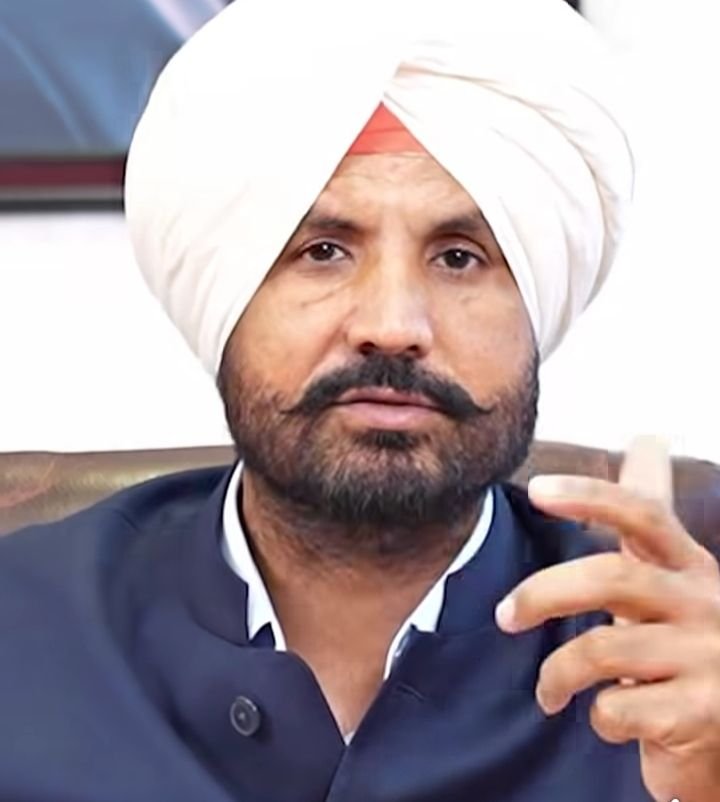
Chandigarh। : With Punjab heading towards Assembly elections expected within the next six months, Punjab Congress president Amarinder Singh Raja Warring has called for an immediate suspension of the Special Intensive Revision (SIR) of electoral rolls, arguing that the exercise should not alter the voter base so close to the state elections.
Warring has demanded that the Assembly polls be conducted using the electoral rolls that formed the basis of the 2024 Lok Sabha elections, with no deletions made during the ongoing revision process. He said this was necessary, in his view, to ensure that eligible voters are not inadvertently excluded from exercising their franchise.
The demand comes at a politically sensitive stage of the SIR exercise in Punjab. The Election Commission published the draft electoral rolls for all 117 Assembly constituencies on August 13, after an extensive house-to-house enumeration exercise. The draft process recorded the status of voters identified as absent, shifted, deceased or duplicate, while eligible citizens were given an opportunity to seek inclusion or correction.
According to figures reported after publication of the draft roll, around 20.66 lakh names were excluded from the draft electoral roll. The categories included voters reported as permanently shifted, deceased, untraceable or having duplicate entries. At the same time, the Election Commission’s process provides for claims, objections and applications for inclusion or correction before the final roll is prepared.
The final electoral roll for Punjab is scheduled to be published on October 12, according to Chief Electoral Officer Anindita Mitra. The claims-and-objections period for the draft roll ended on September 12, while the disposal of claims and objections is continuing as part of the revision process.
It is against this backdrop that Warring has raised concerns over the potential impact of the revision on the forthcoming Assembly elections.
The Punjab Congress chief has particularly objected to the requirement under the SIR framework relating to linking an elector or family member with the previous intensive revision electoral roll. He has argued that requiring first-time voters and others to establish a connection with their parents or grandparents in an earlier electoral roll can create difficulties, particularly for citizens who may not have access to decades-old electoral records.
The issue of linking current electors with previous SIR records has become a wider point of debate around the revision exercise. The Election Commission’s voter-services system allows electors to search the previous SIR roll and locate entries using details such as name, relative’s name, Assembly constituency and polling station. Punjab also maintains an online facility for searching the 2003 electoral roll.
Warring has described the documentation and verification requirements as a potential barrier to genuine voters and alleged that the exercise could disenfranchise a large number of people. He has also alleged that the process is being used in a manner that could disproportionately affect voters whom the BJP does not consider its supporters. That is a political allegation by the Congress and has not been established as a finding of the Election Commission.
His latest demand is that the SIR process should be deferred until after the Punjab Assembly elections and subsequently undertaken with greater transparency and without what he describes as unnecessary procedural complexities.
The Congress has also linked its concerns to broader questions being raised nationally about the conduct of electoral-roll revisions. On September 23, Punjab Leader of the Opposition Partap Singh Bajwa said objections reportedly raised by Election Commissioners Sukhbir Singh Sandhu and Vivek Joshi over various aspects of voter additions and deletions, electoral-roll data and the SIR process had reinforced concerns being voiced by the party. These remain political interpretations of the significance of those objections.
The Election Commission, meanwhile, has maintained the formal process for correcting and updating the rolls. In Punjab, voters whose names are missing from the draft roll can seek inclusion through Form 6, while Form 8 is available for corrections and changes in electoral details. The SIR process is intended to identify and remove ineligible, duplicate, deceased or shifted entries while providing mechanisms for eligible voters to establish their entitlement and seek inclusion.
The timing of the dispute is significant for Punjab politics. The state is approaching another Assembly election cycle, and the composition of the electoral rolls will directly determine who is eligible to vote in the constituencies. With the final rolls scheduled to be issued on October 12, political parties and voters are closely watching the disposal of claims and objections and the number of names ultimately retained or restored.
For the Congress, the central concern is therefore not simply the revision of voter lists but the timing, documentation requirements and possible exclusion of eligible voters before an Assembly election. For the Election Commission, the challenge is to complete the statutory revision while ensuring that legitimate voters have adequate opportunity to establish their eligibility and correct errors.
Warring’s demand puts that conflict at the centre of Punjab’s electoral debate: whether the existing voter base should be retained for the forthcoming Assembly elections or whether the ongoing SIR process should continue through to the final electoral roll scheduled for October.
The final impact will depend on the outcome of the claims-and-objections process and the final electoral roll, rather than on the number of names initially left out of the draft list.