
Saptrishi Soni
Bathinda: Punjab Chief Minister Bhagwant Singh Mann on Tuesday asserted that the state is witnessing a significant shift in employment trends, claiming that transparent and merit-driven government recruitment has begun reversing the migration of young Punjabis who had earlier left the country in search of better opportunities abroad.
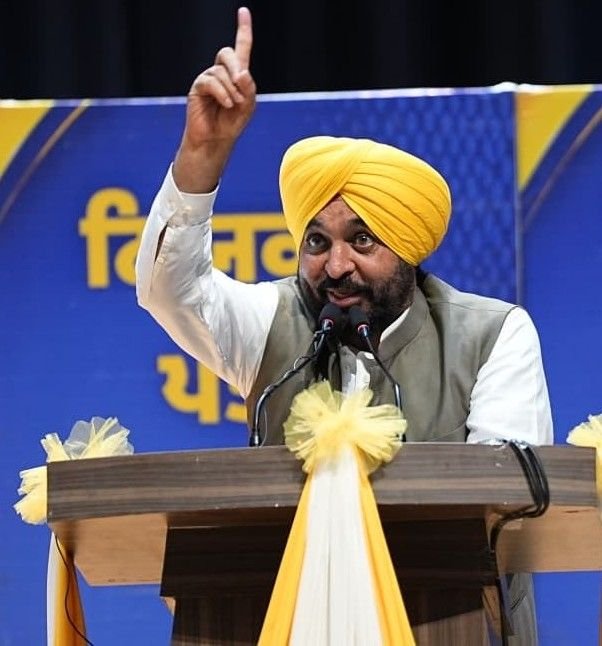
Addressing a gathering while distributing appointment letters to 665 newly recruited employees of the Punjab State Power Corporation Limited (PSPCL), the Chief Minister said the state government has now provided more than 68,000 government jobs during its four-and-a-half years in office, describing the recruitment process as one of the most transparent in Punjab’s history.
The event, held in Bathinda, was presented by the government as both an employment milestone and a reflection of broader administrative reforms aimed at restoring public confidence in government institutions. Mann said the era when public sector jobs were allegedly influenced by bribery, political patronage and recommendations had come to an end, with recruitment now based solely on merit and eligibility.
According to the Chief Minister, the change has encouraged many young Punjabis who had settled overseas to reconsider their future and return home in search of stable careers. He urged members of the Punjabi diaspora, particularly the youth working abroad, to come back and contribute to the state’s economic and social development, assuring them that opportunities were steadily expanding across sectors.
Highlighting the changing employment landscape, Mann referred to one of the newly recruited candidates who, he said, had successfully secured three government job offers through competitive examinations. He described the achievement as an example of a recruitment system where talent, rather than influence, determines success.
The Chief Minister maintained that every government appointment made under the present administration had followed a transparent selection process and claimed that none of the recruitments had faced legal challenges, which he said reflected the credibility of the system. He encouraged the newly appointed employees to view public service as a responsibility rather than merely a career, urging them to remain humble and committed to serving people, particularly those from disadvantaged sections of society.
Beyond employment, Mann used the occasion to outline his government’s broader governance agenda, placing education at the centre of Punjab’s long-term development strategy. He argued that quality education remains the most effective instrument for breaking cycles of poverty and social inequality, saying sustainable progress cannot be achieved through temporary financial assistance alone.
The Chief Minister highlighted the government’s investments in modernising schools through teacher training programmes, smart classrooms and digital learning infrastructure. Referring to recent educational performance indicators, he said Punjab had emerged as the country’s top-performing state in primary and middle-school education, surpassing states traditionally recognised for educational excellence, including Kerala, Maharashtra and Delhi.
According to Mann, the state’s educational transformation has been driven by consistent investment in classroom infrastructure, improved teaching practices and technology-enabled learning. He said Punjab now records near-universal electricity connectivity and computer availability in government schools, creating a stronger foundation for future learning outcomes.
In a significant announcement aimed at improving the working conditions of government employees, particularly women, Mann said female employees would, after completing their probation period, be posted within a 40-kilometre radius of their homes wherever feasible. He said the decision would help employees maintain family responsibilities while continuing their professional careers, thereby promoting work-life balance and improving administrative efficiency.
The Chief Minister also outlined several welfare initiatives being implemented by the state government. He said tax revenues collected from citizens were being reinvested into public infrastructure, schools, healthcare institutions and roads. Referring to the government’s free electricity scheme, Mann said nearly 90 per cent of households were benefiting from subsidised power, while infrastructure projects and the closure of selected toll plazas had generated financial savings for the public.
In the agricultural sector, Mann said irrigation through canal water had increased substantially since his government assumed office. Extensive investments in watercourses, canal networks and recharge structures, he said, were helping improve groundwater levels while reducing dependence on tube wells. He described water conservation as essential for safeguarding Punjab’s agricultural future and ensuring long-term environmental sustainability.
Healthcare also featured prominently in the Chief Minister’s address. He said the Mukh Mantri Sehat Yojana had been launched to provide comprehensive health insurance coverage to all 6.5 million families in Punjab, offering free medical treatment worth up to ₹10 lakh per family. According to him, more than 30 lakh families have already received health cards under the scheme, with thousands benefiting from cashless treatment.
Turning to agriculture, Mann claimed that for the first time in the state’s history, farmers were receiving uninterrupted daytime electricity supply for irrigation during the paddy season, describing it as a significant operational improvement that has eased farming operations across Punjab.
The Chief Minister also announced that the Maavan Dheeyan Satkar Yojana is scheduled to be launched from July 1. Under the proposed scheme, women above the age of 18 will receive monthly financial assistance, while women belonging to Scheduled Caste communities will receive enhanced support. He described the initiative as part of the government’s broader commitment to strengthening women’s economic security and social welfare.
Throughout his address, Mann maintained that governance must remain focused on transparency, accountability and equal opportunity. He argued that Punjab’s development depended on restoring public trust in institutions, investing in education and creating employment opportunities that encourage young people to build their future within the state rather than seeking opportunities overseas.
For many of the newly appointed employees, the ceremony represented more than a formal recruitment exercise. Several candidates expressed gratitude to the state government, saying they had secured their positions through open competition and viewed the appointments as recognition of merit rather than influence. Their experiences, they said, reinforced confidence that professional aspirations could now be realised through a fair and transparent recruitment system.
As Punjab continues to grapple with challenges ranging from migration and unemployment to agricultural sustainability and public sector reform, the government’s emphasis on merit-based recruitment and institutional transparency reflects its effort to project a governance model centred on opportunity, accountability and long-term human development.
#Punjab #BhagwantMann #GovernmentJobs #PSPCL #MeritBasedRecruitment #Employment #ReverseMigration #PunjabYouth #EducationReforms #GoodGovernance #PunjabGovernment #PublicService #Bathinda #IndiaNews #RanglaPunjab
This is an auto web-generated news web story.