
Saptrishi Soni:
Punjab’s political battle is entering a more aggressive phase, with Congress stepping up its attack on Chief Minister Bhagwant Mann and seeking to turn questions over the AAP government’s stability into a central issue ahead of the 2027 Assembly election.
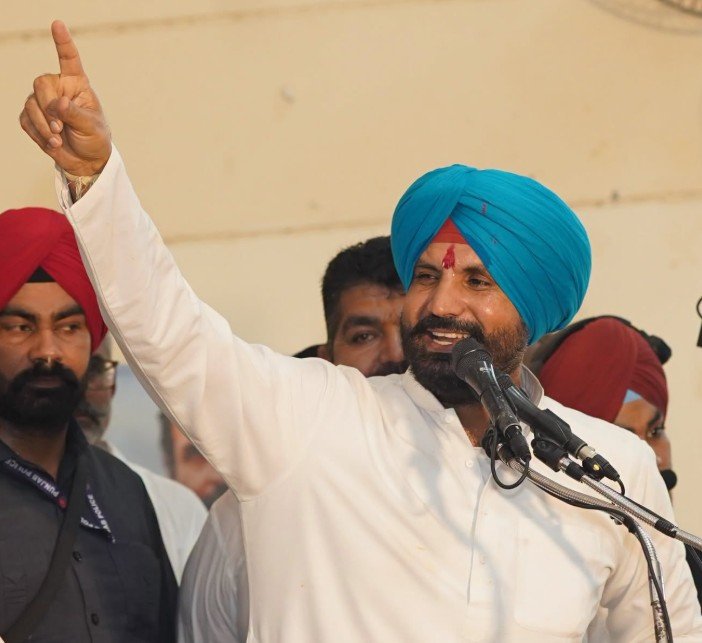
Punjab Congress president Amarinder Singh Raja Warring has claimed that the Mann government could be heading towards a loss of majority and even suggested that the current Assembly session could be among the last for the present government. The remarks represent a direct political challenge to AAP at a time when all major parties are beginning to position themselves for the next electoral contest.
Warring’s argument is not based on a formal loss of majority or any announced change in government, but on his assessment of growing dissatisfaction within the ruling establishment. The Congress leader has sought to portray the AAP government as increasingly vulnerable and to suggest that political differences within the ruling camp could eventually affect its ability to complete its term.
The Mann government, however, continues to function with its legislative majority and remains focused on its governance agenda. For AAP, the immediate political task is to prevent opposition claims about instability from gaining wider public acceptance, particularly as Punjab moves closer to the 2027 election.
The Congress attack reflects a broader change in the political atmosphere. The AAP entered government in 2022 with an overwhelming mandate, winning 92 of the Punjab Assembly’s 117 seats. Four years later, the political environment is considerably more competitive. Congress, BJP, Shiromani Akali Dal and newer political formations are all attempting to expand their influence.
For Congress, questioning the government’s stability serves two purposes. It puts pressure on the Chief Minister while also allowing the party to project itself as the principal alternative to AAP. The challenge, however, is to convert political criticism into a convincing electoral narrative.
The ruling party has several governance achievements that it is likely to place at the centre of its defence. These include government recruitment, welfare programmes, investment proposals, expansion of public services and initiatives aimed at reducing drug abuse and improving education.
At the same time, the government faces sustained criticism over law and order, employment, examination controversies, fiscal pressures and the broader question of whether its promises have translated into sufficient improvement in everyday life.
That contrast is likely to define much of the political discourse over the coming months.
The emerging political contest is also becoming increasingly fragmented. The BJP is seeking to establish itself as an independent force in Punjab, while recent statements from Haryana Chief Minister Nayab Singh Saini have sought to dismiss speculation about a renewed BJP-SAD alliance, saying the BJP’s alliance is with the people of Punjab.
The Shiromani Akali Dal, meanwhile, is attempting to rebuild its traditional political base. Sukhbir Singh Badal has intensified criticism of the Mann government over issues including recruitment examinations and alleged irregularities, while also beginning to articulate policy positions for the next election.
A further complication for the established parties is the emergence of smaller and newer political forces. Waris Punjab De, led politically by jailed MP Amritpal Singh, has already begun preparing for the 2027 contest and has announced its first Assembly candidate, adding another dimension to Punjab’s increasingly fragmented electoral landscape.
For Bhagwant Mann, therefore, the political challenge is no longer simply defending the AAP government against Congress. The Chief Minister must simultaneously manage attacks from Congress, BJP and the Akalis while dealing with emerging regional forces that could influence particular constituencies.
The opposition’s immediate objective is to turn individual governance controversies into a larger argument about the government’s performance. AAP, by contrast, will seek to keep the political conversation centred on its welfare and development record.
The next few months could consequently prove crucial. If the Mann government maintains internal cohesion and continues to deliver visible policy outcomes, claims of instability may remain largely political rhetoric. But if internal disagreements become public or governance controversies accumulate, the opposition will have an opportunity to give its campaign greater credibility.
Punjab’s 2027 election is still ahead, but the political battle has already begun. The central question emerging from the latest confrontation is whether AAP can defend the dominance it achieved in 2022, or whether a divided but increasingly assertive opposition can convert public dissatisfaction into a credible alternative government.
This is a web generated news report.