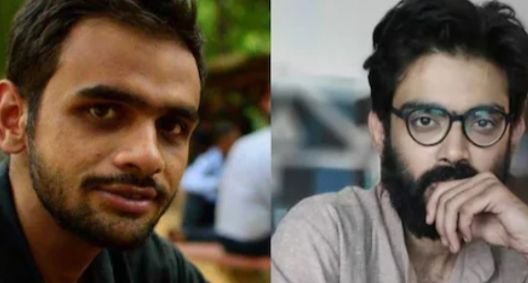
The Supreme Court on Monday declined to grant bail to activists Umar Khalid and Sharjeel Imam in connection with the larger conspiracy case related to the 2020 northeast Delhi riots, holding that the material placed by the prosecution discloses a prima facie case against them under the Unlawful Activities (Prevention) Act. At the same time, the apex court granted bail to five other accused in the same case, offering partial relief while maintaining a strict approach towards those alleged to have played a central role in the conspiracy.
A bench comprising Justices Aravind Kumar and N V Anjaria examined the appeals filed by the accused challenging earlier orders that denied them bail. After considering the submissions and the prosecution material, the court observed that the statutory threshold required for denial of bail under the UAPA was met in the case of Umar Khalid and Sharjeel Imam. The bench made it clear that at this stage of the proceedings, it was not inclined to enlarge them on bail.
In its order, the court stated that the prosecution’s material, as it currently stands, indicates prima facie allegations against the two activists. Given the nature of the charges and the legal framework governing offences under the UAPA, the court held that the conditions prescribed under the law for granting bail were not satisfied in their cases. The bench emphasised that its observations were limited to the question of bail and would not prejudice the trial on merits.
However, the Supreme Court granted bail to five other accused in the same matter—Gulfisha Fatima, Meeran Haider, Shifa Ur Rehman, Mohd Saleem Khan and Shadab Ahmad. While granting relief, the court took note of the specific roles attributed to them, the length of their incarceration and the stage of the trial. The bench also considered the principle that prolonged detention without conclusion of trial can infringe upon personal liberty, particularly when the alleged role does not meet the stringent threshold applied under the anti-terror law.
All the accused in the case were booked under provisions of the Unlawful Activities (Prevention) Act along with sections of the erstwhile Indian Penal Code. The Delhi Police has alleged that Umar Khalid, Sharjeel Imam and others were part of a larger conspiracy to orchestrate the communal violence that erupted in northeast Delhi in February 2020. According to the prosecution, the violence was not spontaneous but the result of a planned design aimed at destabilising public order.
The 2020 riots resulted in the deaths of 53 people and left more than 700 injured, causing extensive damage to property and deep communal tensions in the affected areas. The violence coincided with widespread protests across the country against the Citizenship (Amendment) Act and the proposed National Register of Citizens, which had triggered intense political and social debate at the time.
The case has remained one of the most closely watched legal battles linked to the Delhi riots, raising broader questions about the use of stringent anti-terror laws, the balance between national security and civil liberties, and the pace of criminal trials in cases involving prolonged incarceration. While the denial of bail to Umar Khalid and Sharjeel Imam reinforces the Supreme Court’s cautious approach in UAPA matters, the grant of bail to other accused reflects a nuanced assessment based on individual roles and circumstances.
The trial in the case is still underway, and the Supreme Court’s order underscores that the findings at the bail stage do not amount to a final determination of guilt or innocence.