Saptrishi Soni
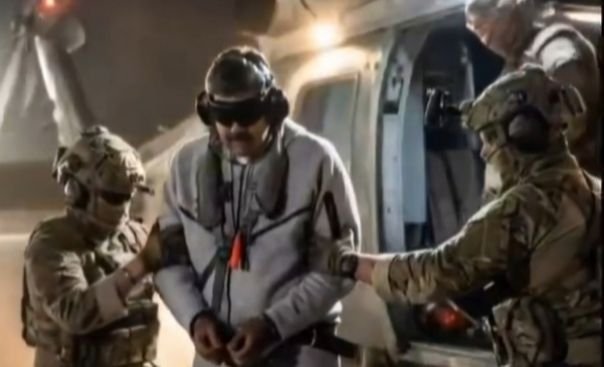
Recent narratives suggesting that Venezuelan President Nicolás Maduro was taken away by American special forces with minimal resistance from the Venezuelan military have triggered intense debate across strategic and political circles. While no verified or independent evidence confirms such an operation or the removal of Maduro by foreign forces, the very plausibility with which such claims are received reveals deeper truths about power, legitimacy, authoritarian governance and the fragility of democratic institutions in parts of the world.
The discussion, therefore, is less about whether a specific covert operation occurred and more about why large sections of global opinion find the idea believable. This credibility gap is rooted in Venezuela’s prolonged political crisis, the nature of its civil–military relations, and the historical record of foreign intervention, covert diplomacy and regime manipulation in geopolitically sensitive regions.
Venezuela has, for years, existed in a state of political and economic breakdown. Once one of Latin America’s wealthiest nations due to its vast oil reserves, the country has experienced hyperinflation, widespread shortages of food and medicine, mass migration and a sharp collapse in public services. According to international estimates, more than seven million Venezuelans have left the country over the past decade, making it one of the largest displacement crises in modern history outside a war zone. This collapse has steadily eroded public trust in political leadership and institutions.
At the center of this crisis lies the concentration of power. Nicolás Maduro, who succeeded Hugo Chávez, gradually consolidated authority over the executive, legislature, judiciary and electoral institutions. Repeatedly disputed elections, allegations of vote manipulation, restrictions on opposition parties and media censorship weakened democratic credibility. Over time, the distinction between an elected leader and an entrenched ruler became increasingly blurred, a pattern seen in many states where leaders remain in power for extended periods.
When power becomes permanent, governance often shifts from public accountability to self-preservation. Leaders begin to rely more on loyalists than institutions, rewarding proximity over merit. In Venezuela, key state assets, particularly the oil sector, were increasingly controlled by a narrow political–military elite. Access to resources, contracts and foreign currency became tools of patronage. This not only bred corruption but also aligned the survival of powerful individuals with the survival of the regime itself.
In such systems, the military plays a decisive role. Venezuela’s armed forces were deeply integrated into civilian governance, controlling ministries, public enterprises and strategic sectors. Promotions, privileges and economic benefits tied senior officers closely to the ruling establishment. This arrangement reduces the likelihood of internal rebellion but also creates a paradox: the military’s loyalty is often more personal and transactional than ideological or constitutional.
This background helps explain why claims of “minimal resistance” by Venezuelan forces, even if unproven, sound plausible to many observers. In highly centralized systems, where command structures are politicized and fragmented by patronage, decisive action may not come from institutions but from individual calculations. If senior commanders believe their interests are better served by neutrality or quiet accommodation, resistance may never materialize. History shows that regimes often collapse not through fierce battles, but through silence, defections or negotiated exits.
On the other side of the equation lies the role of external powers. The United States has a long and controversial history of intervention in Latin America, ranging from overt military actions to covert operations, economic pressure and diplomatic isolation. Venezuela, with the world’s largest proven oil reserves, has long been a strategic concern for Washington. Sanctions, recognition of alternative political leadership and intelligence operations have all been part of the U.S. policy toolkit toward Caracas.
This history fuels speculation about secret deals and backchannel negotiations. In many geopolitical crises, quiet understandings between rival elites have shaped outcomes more than public declarations. Defense experts often point out that modern regime change, when it occurs, is rarely a dramatic invasion; it is more often the result of elite bargains, financial pressure and controlled exits designed to avoid chaos. Whether or not such arrangements exist in a specific case, the perception alone reflects a broader distrust of transparency in global power politics.
However, this raises critical ethical and legal questions. Even if a leader has undermined democracy, external removal through force or covert action challenges the principles of sovereignty and international law. It sets a precedent where powerful states become arbiters of legitimacy, a dangerous notion in a world already marked by inequality of power. From this perspective, neither authoritarian entrenchment nor foreign intervention offers a clean moral solution.
The deeper lesson lies in how democracies decay. When leaders stop listening to citizens, manipulate electoral processes, suppress dissent and concentrate authority, they hollow out the very institutions meant to protect them. Over time, courts lose independence, legislatures become symbolic and the media is silenced. What remains is not stability, but stagnation and fear. In such an environment, the state itself becomes fragile, vulnerable to internal collapse or external pressure.
Examples abound beyond Venezuela. From parts of Africa to Eastern Europe and Asia, prolonged rule has often led to censorship, erosion of checks and balances, and the normalization of emergency powers. Economic inequality widens, public anger grows, and legitimacy rests increasingly on force rather than consent. When this happens, even the military, once seen as a pillar of the state, becomes a political actor rather than a neutral defender of the constitution.
Ultimately, the global resonance of stories about silent takeovers and secret deals is a warning sign. It reflects a world where citizens no longer fully trust leaders, institutions or even official narratives. Whether or not such events occur, the conditions that make them imaginable are real and deeply troubling.
The sustainable alternative lies not in covert operations or permanent rulers, but in strong institutions, transparent elections, independent judiciaries and genuine civilian control over the military. Democracies do not collapse overnight; they erode gradually, often under leaders who claim to protect them. When power becomes an end in itself, the state drifts toward authoritarianism, and the space between governance and anarchy narrows.
In the end, Venezuela’s crisis, real or perceived, serves as a global case study. It shows how the abuse of power, disregard for democratic norms and concentration of authority can leave a nation vulnerable—not only to internal decay but also to external narratives, interventions and speculation. And it reminds the world that democracy, once weakened, is far harder to restore than to dismantle.