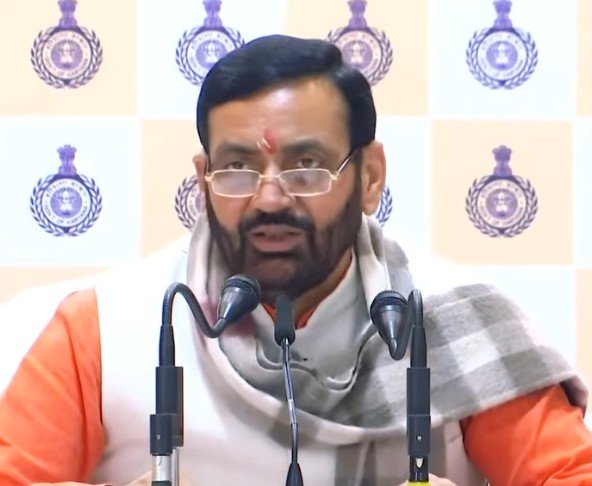
In a decisive administrative move aimed at fast-tracking infrastructure growth and strengthening public service delivery, Haryana Chief Minister Nayab Singh Saini chaired a late-evening meeting of the High Power Purchase Committee on Monday, clearing procurement and development proposals spanning more than 40 state departments. The approvals cover critical sectors including power, public health engineering, public works, irrigation, transport and information technology, signalling what the government describes as a renewed push toward time-bound and accountable governance.
Positioning the decisions as part of a larger reform-oriented agenda, Chief Minister Saini emphasised that the core objective of his government remains the delivery of high-quality public services to citizens across urban and rural Haryana. He directed senior officials to ensure strict monitoring of all approved projects, underlining that timelines and quality benchmarks must be adhered to without exception. Stressing fiscal discipline, the Chief Minister stated that every rupee spent on development would be scrutinised and that negligence in execution would not be tolerated. He also indicated that he would personally review the progress of key projects to maintain momentum and transparency.
A significant portion of the approvals focused on strengthening drinking water infrastructure under the AMRUT-2 scheme and other state initiatives. In Palwal city, the construction process for two Ranney wells and one boosting station has been finalised, with an estimated cost of around ₹100 crore. The project is expected to substantially improve access to clean drinking water for residents and enhance urban water distribution systems.
In Mahendragarh district, the government cleared the construction of a 6 MLD capacity water works facility in Sirohi Behali village at a cost of ₹53.47 crore. Once completed, the facility will supply potable water to approximately 39 surrounding villages, addressing long-standing rural water challenges in the region. Additionally, Rewari city will see the development of an 8 MLD raw water storage tank at an estimated cost of ₹27 crore, aimed at strengthening the city’s water supply resilience amid rising demand.
Road and building infrastructure also received major attention during the meeting. The strengthening of the Chhuchhakwas–Matanhail road in Jhajjar district has been approved with a budget of ₹37.89 crore, while the Dharsul–Ratia road project in Tohana will be upgraded at a cost of ₹46.20 crore. These projects are expected to enhance regional connectivity, reduce travel time and improve rural-urban linkages.
In the education and administrative sectors, the government approved the construction of an academic block at the Government Women’s College in Gurugram at a cost of ₹9.37 crore. In Fatehabad, an excise building will be constructed with an allocation of ₹13.60 crore, reflecting efforts to modernise administrative infrastructure. The Haryana State Industrial and Infrastructure Development Corporation (HSIIDC) will also establish a facilitation centre in Sohna at a cost of ₹12.80 crore, designed to streamline industrial clearances and promote investment in the region.
Urban transport modernisation formed another key pillar of the meeting’s decisions. Under the Prime Minister’s City Bus Service initiative, the process to deploy 200 electric city buses in Faridabad and Gurugram has been finalised. This move aligns with broader goals of promoting sustainable mobility and reducing urban pollution. Supporting infrastructure will also be developed, with electric bus depots planned in Ambala at a cost of ₹13 crore and in Hisar at ₹14 crore. The Transport Department has additionally received approval for the purchase of 19 cranes to strengthen enforcement and operational capabilities. In Faridabad, a gymkhana club project worth ₹16.50 crore was also cleared.
In the security domain, the Police Department’s proposal to procure advanced screening equipment for district secretariats and government buildings was approved. This includes 163 single-door and 183 CCTV-integrated multi-zone metal detector machines, aimed at enhancing security protocols in sensitive public offices.
The energy sector witnessed substantial allocations, underscoring the government’s focus on strengthening power infrastructure. In Panipat and Karnal, procurement of transformers and related equipment worth ₹57.25 crore has been approved for seven new 33 kV substations. Similarly, in Sonipat, Rohtak and Jhajjar, equipment valued at ₹62.75 crore will be procured for seven additional 33 kV substations.
Further expanding grid capacity, new 66 kV substations will be constructed in Musimbal (Ambala) and Saidopur (Yamunanagar) at a combined cost of ₹40 crore. Dharuhera in Rewari district will receive a 66 kV substation costing ₹33.75 crore, while Gurugram’s Sector 75A will see the establishment of a 220 kV substation with a substantial investment of ₹75 crore. These projects are expected to improve power reliability for residential, agricultural and industrial consumers.
Irrigation and connectivity projects were also prioritised. In Yamunanagar’s Damla village, a new bridge will be constructed at a cost of ₹13.39 crore, improving local transport infrastructure. Meanwhile, in Rohtak, the remodelling and capacity enhancement of four RD stretches of the Bhaloth distributary will be undertaken with an investment of ₹97.45 crore, strengthening irrigation efficiency and supporting the agrarian economy.
Politically, the wide-ranging approvals reinforce Chief Minister Nayab Singh Saini’s attempt to project a governance model centred on infrastructure expansion, administrative efficiency and fiscal prudence. By personally overseeing the High Power Purchase Committee’s decisions and emphasising accountability, Saini is seeking to consolidate his leadership image as development-focused and execution-driven.
As Haryana continues to balance rapid urbanisation with rural development demands, the scale and diversity of the approved projects suggest a coordinated effort to address water security, road connectivity, energy stability, public transport modernisation and administrative infrastructure simultaneously. Whether these clearances translate into timely on-ground execution will be closely watched, but the latest decisions underscore the Saini government’s intention to maintain development as the central theme of Haryana’s political and policy discourse.