
Saptrishi Soni
A chilling act of violence in Punjab’s border belt has shaken public confidence and raised serious questions about the state’s internal security framework. In a shocking incident, unknown gunmen stormed a police post in Adhiyan village of Gurdaspur district and shot dead two police personnel inside the chowki before fleeing the scene—an audacious assault that underscores the growing boldness of criminal and extremist elements.
The village is located barely one kilometre from the Pakistan border, placing the incident in one of the most sensitive and strategically vulnerable zones of the state. The killing of police personnel inside a police post is not just a crime—it is a direct assault on the authority of the state and a grave challenge to the rule of law.
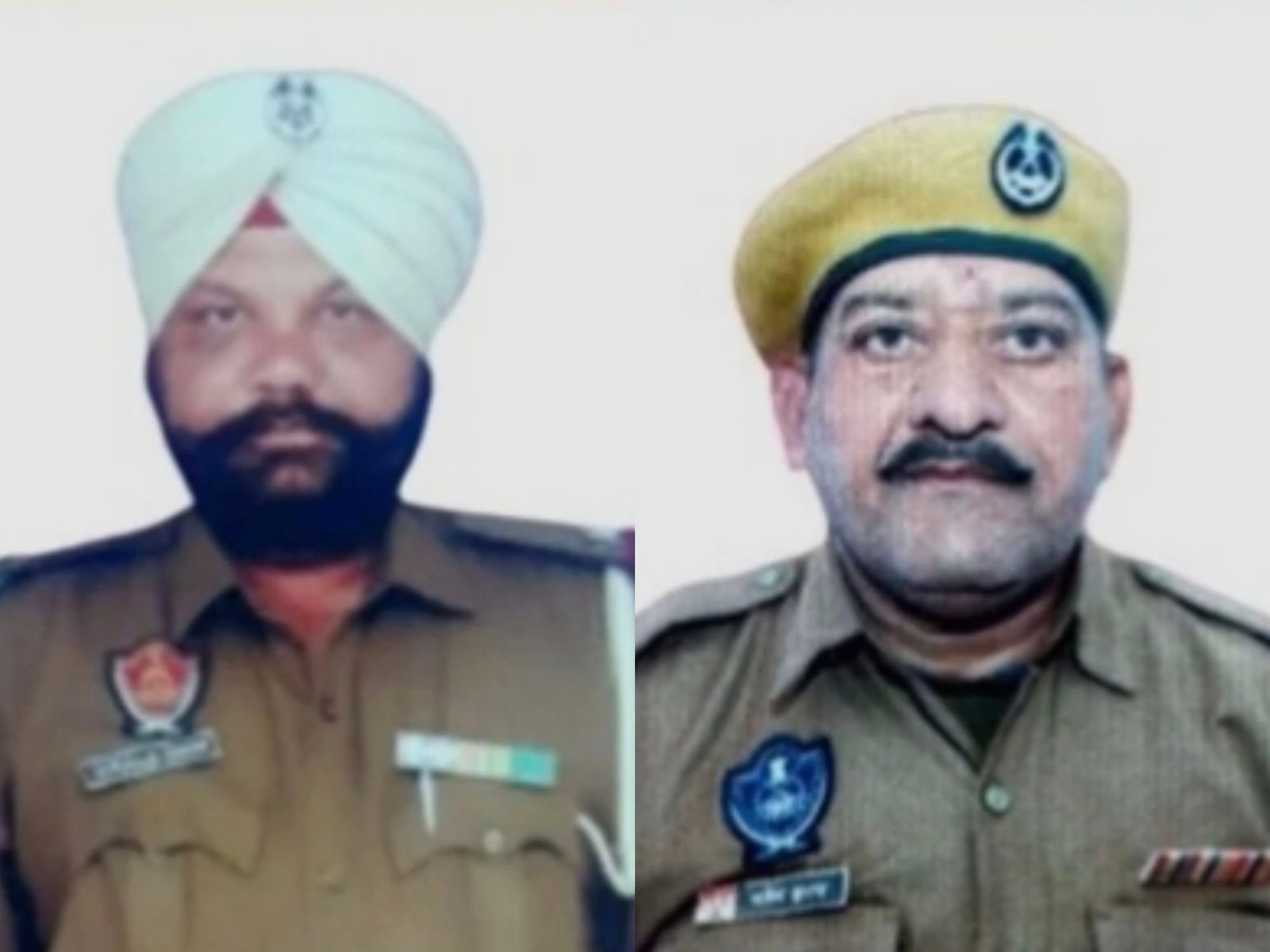
According to preliminary information, the attackers entered the police post late at night and opened indiscriminate fire. Assistant Sub-Inspector Gurnam Singh and Home Guard jawan Ashok Kumar were killed on the spot, with no chance to defend themselves. Six empty cartridges were recovered from the scene, indicating a targeted and well-planned execution-style attack. Both victims were reportedly around 50 years of age.
What makes the incident even more disturbing is the manner in which the bodies were discovered. Hours later, when contact with the post could not be established, local representatives were sent to check on the personnel. At first glance, nothing appeared unusual—one officer was seated on a chair, the other lying on a cot under a blanket. Only upon closer inspection did the horrifying reality emerge, exposing the cold-blooded nature of the killings.
Adding to the gravity of the situation, posters and online posts allegedly linked to an extremist group surfaced, claiming responsibility for the attack. These posts reportedly carried organisational symbols and images of the slain policemen, amplifying fears of a deeper security threat in Punjab’s border districts.
This incident is not merely a local crime—it is a direct warning signal. The fact that armed attackers could enter a police chowki, execute two uniformed personnel, and escape without resistance reflects a dangerous erosion of fear of law enforcement. It raises fundamental questions about intelligence preparedness, border security coordination, surveillance mechanisms, and on-ground policing strength in sensitive areas.
Politically and administratively, this moment demands more than routine condemnation. It calls for decisive political will, uncompromising action, and a visible assertion of state authority. When police personnel themselves are no longer सुरक्षित (safe) within their own posts, the message sent to society is deeply unsettling.
Punjab, given its history, geography, and border sensitivity, cannot afford complacency. This is a moment for the government to demonstrate zero tolerance. The perpetrators must be hunted down swiftly, networks behind them dismantled, and accountability fixed at every level—intelligence failure, security gaps, and operational lapses included.
Law and order is not just about crime control; it is about public confidence. The killing of policemen inside a chowki shakes that confidence at its core. The state must respond with firmness, clarity, and strength—because anything less will only embolden forces that thrive on fear, instability, and institutional weakness.
This is no longer just a criminal investigation. It is a test of governance, authority, and the state’s capacity to protect its own protectors. The time for symbolic action is over. What Punjab needs now is a strong, visible, and uncompromising response.