

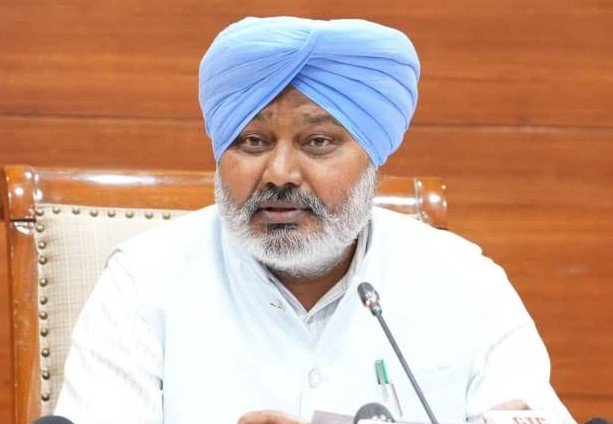
In a major enforcement push targeting revenue leakages, the Punjab government has uncovered a large-scale tax evasion network within the state’s hospitality sector, with initial findings pointing to a turnover suppression of nearly ₹200 crore. The disclosure, made by Finance, Planning, Excise and Taxation Minister Harpal Singh Cheema, signals a significant escalation in the Bhagwant Mann-led administration’s efforts to tighten compliance and modernise tax enforcement through technology-driven mechanisms.
Addressing the media in Chandigarh, the minister outlined how a comprehensive, data-backed investigation has already brought 882 establishments under scrutiny, spanning dhabas, restaurants, bakeries, catering units, and fast-food outlets. The probe, which focuses on the financial year 2025–26, has so far led to the identification of substantial discrepancies in reported turnover, exposing what officials describe as a deeply entrenched pattern of under-reporting in high-cash segments of the economy.
According to the findings shared by the minister, 239 cases have undergone detailed examination to date, revealing suppression of turnover worth approximately ₹50 crore. This has translated into a tax liability of around ₹2.54 crore, of which ₹2.02 crore has already been recovered. Authorities indicated that the recovery process is ongoing and expected to intensify as the investigation expands.
What adds further weight to the crackdown is the expectation that the scale of evasion could grow significantly. With data from previous financial years—2023–24 and 2024–25—now being incorporated into the analysis, officials estimate that the total magnitude of the fraud may approach ₹500 crore. This suggests that the current findings may only represent a fraction of a much larger systemic issue within the sector.
The investigation has identified clear patterns in the scale of discrepancies among taxpayers. Cases involving turnover suppression exceeding ₹2 crore have been detected in a small but significant number of entities, while a broader spread of violations has been observed across mid-sized and smaller businesses. The data points to widespread irregularities, with dozens of establishments under-reporting turnover in ranges between ₹5 lakh and ₹1 crore, indicating that the problem is not confined to a few large players but is pervasive across the industry.
Geographically, the probe has highlighted urban centres such as Mohali, Jalandhar, and Ludhiana as key hotspots for tax evasion. These cities, known for their dense concentration of food and hospitality businesses, have collectively contributed a substantial share of the detected discrepancies. Officials suggest that the high volume of cash transactions, coupled with hybrid payment systems combining digital and offline methods, has created opportunities for concealment of actual revenues.
Sector-specific analysis further underscores the nature of the challenge. Roadside eateries and dhabas account for a notable portion of the suppressed turnover, followed by small cafes and beverage outlets, as well as fast-food chains. These segments, often characterised by rapid transactions and limited billing transparency, have emerged as focal points in the ongoing enforcement drive.
A key feature of the crackdown is the use of advanced data analytics and digital intelligence. The investigation has been driven by coordinated inputs from specialised units, including the Tax Intelligence Unit and the State Investigation and Preventive Unit, which have leveraged comparative analysis of GST filings, transactional data, and risk-based profiling to flag suspicious entities. Authorities have also sought detailed records from online billing platforms, enabling cross-verification of actual business activity against declared figures.
Officials highlighted that the state’s “Bill Liyao, Inam Pao” initiative has played a supportive role in strengthening compliance by encouraging consumers to demand proper billing. This, combined with backend data analysis, has enhanced the government’s ability to detect discrepancies that might otherwise go unnoticed.
Importantly, the enforcement exercise has also identified a number of compliant businesses, with no discrepancies found in 52 establishments examined so far. This, according to officials, reflects a calibrated approach aimed at targeting violations without disrupting law-abiding enterprises.
Looking ahead, the government is preparing to deepen the investigation by incorporating additional layers of financial data, including UPI transactions and other digital payment trails. This is expected to significantly improve the accuracy of turnover assessments and reduce the scope for manipulation. Field teams are currently engaged in on-ground verification, reconciling digital records with statutory filings to establish the full extent of evasion.
The Punjab government has made it clear that the crackdown is part of a broader strategy to safeguard public finances and ensure a level playing field for businesses. Minister Harpal Singh Cheema emphasised that strict action would be taken against violators, while compliant taxpayers would continue to receive support and facilitation.
The ongoing probe marks one of the most extensive enforcement exercises in Punjab’s recent fiscal history. As the investigation progresses, it is likely to not only recover lost revenue but also reshape compliance behaviour across the hospitality sector, reinforcing the state’s push towards transparency, accountability, and technology-led governance.