
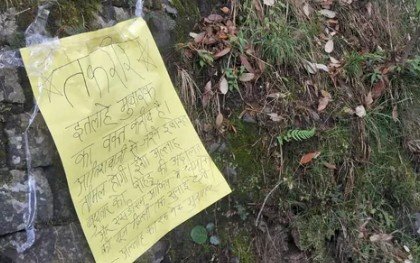
A fresh wave of security concerns has gripped Shimla after anonymous threats warning of explosions at key public institutions surfaced once again, prompting authorities to tighten surveillance and reassess emergency response mechanisms. The latest development comes amid heightened regional anxiety following twin blasts that rocked Jalandhar and Amritsar just a day earlier, intensifying fears across northern India.
According to officials, a threatening poster was recently discovered along Bhrarai Road on the outskirts of Shimla. The message warned of potential explosions at a courtroom and the Sub-Divisional Magistrate’s office in Rohru, raising immediate alarm within administrative and law enforcement circles. Security agencies responded swiftly, deploying teams to thoroughly inspect the identified locations and surrounding areas.
Gaurav Singh confirmed that the police had taken the threat seriously and initiated precautionary measures without delay. He stated that detailed checks were being conducted at both the court complex and the SDM office in Rohru to rule out any immediate danger. Bomb detection squads and local police units have been placed on alert as part of a broader security review.
The incident is part of a troubling pattern that has emerged in recent months. Shimla has witnessed multiple anonymous bomb threats delivered through online messages targeting sensitive locations, including the Himachal Pradesh High Court and several prominent educational institutions. While none of these threats have materialised into actual attacks, their frequency has caused significant disruption and anxiety.
Earlier this week, several schools across the city were forced to send students home after receiving bomb threats, leading to widespread panic among parents and school authorities. The repeated incidents have not only disrupted academic activities but have also placed considerable pressure on law enforcement agencies to ensure public safety while maintaining normalcy.
Officials in the district administration are now working on a coordinated strategy in collaboration with school managements and other institutions to respond more effectively to such threats. The proposed measures are expected to include standardised evacuation protocols, rapid verification systems, and improved communication channels between authorities and institutions.
The timing of these threats has added to their seriousness. Security agencies remain on high alert following the recent explosions near sensitive installations in Punjab, where investigations are still underway to determine the nature and origin of the blasts. Although no direct link has been established between the Shimla threats and the Punjab incidents, authorities are not ruling out any possibility and are treating the situation with utmost caution.
Experts note that even unverified threats can have a cascading psychological impact, disrupting public life and straining administrative resources. In response, officials are increasingly focusing not only on preventive security measures but also on countering misinformation and panic.
For now, the situation in Shimla remains under close watch, with enhanced patrolling, surveillance, and coordination between intelligence units. Authorities have urged residents to remain vigilant but calm, emphasising that all threats are being handled with seriousness and professionalism.
As investigations continue and security strategies evolve, the recent developments underline a growing challenge for urban centres—balancing preparedness with public reassurance in an environment where both real and perceived threats can quickly escalate into widespread concern.