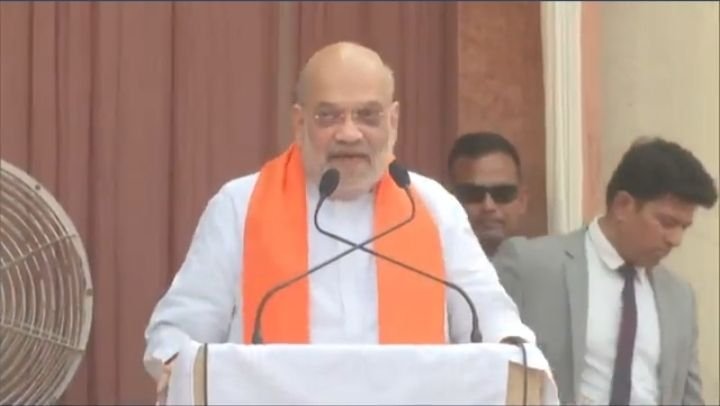
Union Home Minister Amit Shah has sharpened the political confrontation with Punjab’s Aam Aadmi Party (AAP) government over the state’s drug crisis, welcoming Chief Minister Bhagwant Mann’s decision to transfer the Parvinder Singh Jhota case to the Central Bureau of Investigation (CBI) while urging him to hand over two other cases involving the deaths of Gulzar Singh and Bikramjit Singh to the central agency.
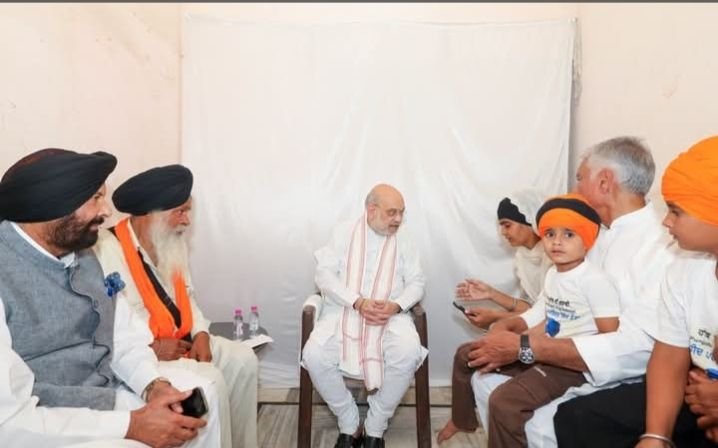
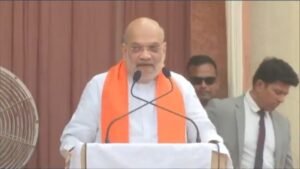
Addressing a gathering during Dussehra celebrations at Daresi Ground in Ludhiana on Tuesday, Shah accused the Mann government of shifting responsibility to the Centre instead of concentrating on tackling drug trafficking in Punjab. His remarks placed the narcotics crisis firmly at the centre of an increasingly charged political debate, with the 2027 Punjab Assembly elections approaching.
Shah said the government should ensure that those responsible for the deaths were identified, apprehended and punished without unnecessary delay. Welcoming the proposed CBI investigation into Jhota’s case, he argued that the other two cases should also be transferred to the agency to ensure a thorough examination.
The intervention came amid heightened attention surrounding Jhota, an activist associated with opposition to drug abuse and trafficking, whose killing has prompted demands for accountability. The Punjab government’s decision to refer his case to the CBI followed a demand from his family. Shah’s call for the other cases to be transferred now puts further pressure on the state government to respond to demands for independent investigations.
A CBI probe, however, does not itself establish guilt. The responsibility for determining the circumstances of each death and identifying any criminal culpability rests with investigators, based on evidence and due legal process.
Drugs become a test of governance
Shah sought to challenge the AAP government’s handling of the drug problem, arguing that it was blaming the Centre while large quantities of narcotics had been seized at ports in Gujarat and Maharashtra. His remarks were intended to counter the argument that Punjab’s drug crisis should be viewed primarily through the lens of cross-border trafficking and the responsibilities of central agencies.
The dispute reflects a broader question confronting governments in Punjab: how responsibility should be divided between the state police, central enforcement agencies and border-security mechanisms when tackling the movement and distribution of narcotics.
Punjab’s drug problem has persisted across successive governments and remains a deeply emotive issue for families, particularly those who have lost young relatives to addiction. While seizures and arrests are important indicators of enforcement, the public’s assessment is also likely to depend on whether trafficking networks are dismantled, supplies are disrupted and the availability of drugs on the ground declines.
For the Mann government, the challenge is to demonstrate that its anti-drug campaign is producing measurable results. For the BJP, Shah’s intervention offers an opportunity to make law enforcement, public safety and accountability central to its political challenge in the state.
BJP sets December 2029 deadline
Shah reiterated the BJP’s pledge to eradicate the drug menace from the country by December 2029, asserting that his party fulfils the commitments it makes. He linked the goal of a drug-free India to the broader ambition of building a *Viksit Bharat*, or developed India.
The pledge provides the BJP with a clear political benchmark, although the scale and complexity of drug trafficking mean that progress will need to be assessed through concrete outcomes rather than declarations alone. Effective enforcement, coordination between agencies, prevention programmes, treatment and rehabilitation will all be important to any sustained reduction in drug-related harm.
During the Ludhiana programme, Shah also participated in the traditional Dussehra celebrations, praising the Ram Leela Committee for preserving the event over the years. He used the occasion of Ravana Dahan to reinforce his message against drugs, setting the effigy alight with a remote control.
The combination of a religious and cultural gathering with a political message gave the visit a wider public profile. Yet the central issue remained the same: whether governments can turn their promises into an effective response to a crisis that has affected communities across Punjab.
Punjab elections: drugs, jobs and rural concerns could shape the contest
With the Punjab Assembly elections expected in 2027, the drug crisis is likely to become a major point of contest between the AAP, the BJP and the Congress, alongside questions concerning employment, farmers’ interests, law and order, public services and the state’s finances. The Shiromani Akali Dal and other regional political forces will also seek to influence the debate around Punjab’s identity, governance and future.
For the BJP, Shah’s visit provides a platform to challenge the Mann government’s credibility on an issue with deep emotional resonance. For AAP, the immediate test is to demonstrate that its campaign against narcotics is effective and that serious cases are investigated transparently. The Congress, meanwhile, can seek to use the controversy to question both the state government’s performance and the political claims made by its opponents.
Whether the drug issue translates into electoral gains for any party will depend on what voters see on the ground. Families affected by addiction and violence are likely to look for justice and protection, while young people will also weigh employment opportunities, education and their prospects for the future. Farmers and rural communities will assess the parties on agricultural policy, income security and public services. As the election approaches, the political contest may grow sharper, but voters’ judgement is likely to turn on a more basic question: which party can offer credible evidence of improvement in their everyday lives?