Saptrishi Soni
Punjab’s political theatre reached a boiling point, as multiple developments around former Shiromani Akali Dal leader Bikram Singh Majithia dominated the state’s narrative, drawing sharp reactions from the Chief Minister’s office and opposition quarters alike. From judicial interventions to explosive public statements and recalibrations of political strategy, the contours of the 2027 Assembly elections are being shaped in real time in the state.
At the centre of the storm is Majithia’s release on bail by the Supreme Court in the long-running disproportionate assets case, involving alleged laundering of over ₹540 crore linked to drug money. The apex court’s decision came after seven months of detention in Nabha Jail, punctuated by sustained legal battles and political controversy. Majithia’s bail was granted on procedural grounds by the Supreme Court, with the trial continuing and the allegations remaining live, according to Punjab AAP leaders. They stressed that bail does not equate to acquittal, asserting that the corruption case will be tested rigorously through the judicial process.
Once released, the veteran SAD leader wasted no time returning to the political spotlight. In a dramatic first public appearance, Majithia declared “Tiger abhi zinda hai,” capturing the defiant mood of his supporters and signalling his intent to remain a central figure in Punjab’s political arena. He urged Punjabis to mount a public movement against the Aam Aadmi Party government, accusing it of undermining democratic freedoms and targeting him politically — claims repeatedly denied by Punjab ministers.
The legal dimension of this chapter also generated headlines. The Punjab Vigilance Bureau had sought stringent bail conditions to restrict Majithia’s movements, including limiting his entry into the state and tracking his communications, but a Mohali court rejected these demands. The court ruled that Majithia, as a resident of Punjab, could not be barred from his home state or have his constitutional rights curtailed without compelling legal basis — a ruling that underlined the judiciary’s independence and constrained state efforts to define bail terms more restrictively.
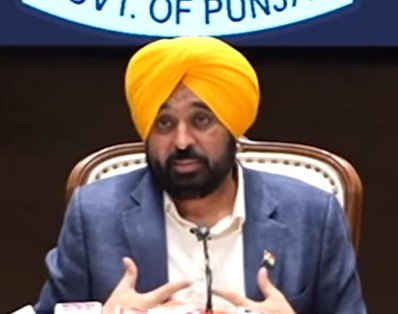
From the Chief Minister’s vantage point, however, this episode has been framed not simply as a personal liberty issue but as part of a broader narrative around law and order, accountability, and systemic corruption. State leaders have pointed out that the investigation and prosecution reflect an effort to break entrenched criminal networks and promote justice, especially in cases intertwined with drug money and financial crimes.
Yet the controversy has taken on wider social and cultural hues as well. CM Bhagwant Mann’s cryptic social media post interpreted by many as a veiled critique of the Radha Soami Satsang Beas chief — who openly expressed confidence in Majithia’s innocence — triggered an unexpected backlash from BJP and SAD ranks. Critics from the opposition accused the Chief Minister of disrespecting a respected spiritual leader and undermining societal harmony. This clash underlines how legal and political battles are spilling over into cultural and religious sensibilities in the state.
Meanwhile, political strategists across party lines are recalibrating their approaches. For the ruling AAP, the handling of Majithia’s case — from strong action against corruption to defensive assertions about judicial outcomes — is being positioned as evidence of proactive governance and no-nonsense politics. Conversely, for opposition parties, Majithia’s release has become a rallying point to galvanise support, critique the state’s governance record and frame the government’s actions as politically motivated.
In the background, other administrative and legal fronts are adding pressure to the political landscape. The Punjab and Haryana High Court’s order directing the state government to halt notifications for municipal elections over ward delimitation issues has posed fresh challenges for the ruling dispensation. Critics argue that delays in local body elections reflect governance vacillation and expose vulnerabilities in administrative planning just months before critical electoral contests.
Against this volatile backdrop, Chief Minister Mann and his team have also launched efforts to project Punjab as a destination for investment, including a high-profile roadshow in Mumbai aimed at wooing industry leaders ahead of the Progressive Punjab Investors’ Summit. These moves signal a dual political and development strategy — to offset political turbulence with economic opportunity narratives.
As the Majithia controversy unfolds and political rhetoric intensifies, Punjab appears poised on the edge of a defining electoral cycle. The interplay of judicial outcomes, political claims and public sentiment will likely shape not only party fortunes but also broader debates on governance, accountability, and justice in the months leading up to the 2027 Assembly elections.