
Chandigarh, September 10, 2026: Veteran human-rights activist Jaspal S. Dhillon has announced the revival of the Human Rights and Democracy Forum (HRDF), positioning it as a non-partisan platform to support people facing alleged rights violations, provide free legal assistance and promote constitutional protections across Punjab.
Dhillon will head the revived organisation as its Chairman. The Forum intends to document complaints of human-rights violations, help affected individuals and families access legal remedies, and advocate greater accountability from public institutions.
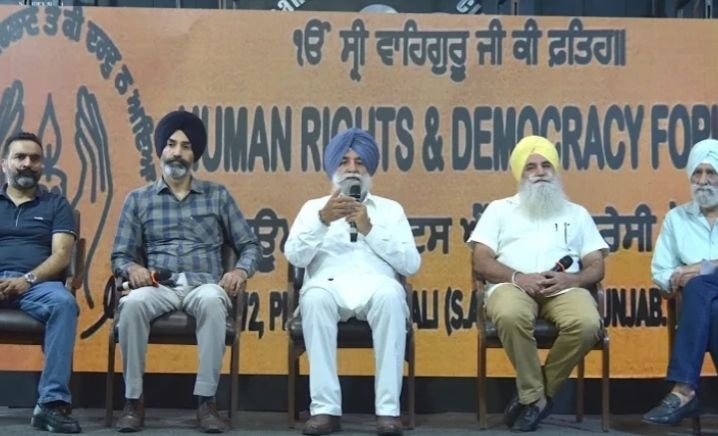
Announcing the initiative at a press conference, Dhillon was accompanied by Gursher Singh, Vice-Chairman; Rajwinder Singh, General Secretary; and Karamjit Singh, Organisational Secretary. He said the decision to reactivate the Forum had been prompted by a growing number of young people and families approaching him with concerns involving alleged unlawful detention, false criminal cases, custodial violence, excessive use of force and denial of due process.
According to Dhillon, these complaints have reinforced the need for an organised platform where people can seek guidance, understand their legal rights and pursue remedies through established legal channels. The HRDF aims to respond to such concerns while keeping its work independent of political affiliations.
### Renewed focus on Punjab’s human-rights legacy
The Forum’s revival also comes amid renewed public discussion about Punjab’s human-rights history during the militancy period. Dhillon referred to questions surrounding alleged extrajudicial killings, disappearances and secret cremations, issues that continue to shape discussions about accountability, justice and the rights of affected families.
He also cited the renewed debate following the release and subsequent removal of the film *Satluj* as part of the wider context in which questions about Punjab’s past have resurfaced.
Dhillon observed that people were revisiting events from those difficult years while, at the same time, younger generations and their families were bringing forward concerns about present-day rights violations. In his view, these parallel developments made the revival of the Forum necessary.
The initiative seeks to connect the broader demand for historical accountability with the need to safeguard civil liberties in contemporary Punjab. Its stated priorities include documenting complaints, facilitating legal support and encouraging institutions to follow constitutional procedures.
### Constitutional safeguards and institutional responsibility
The relaunch places due process, access to justice and institutional accountability at the centre of the Forum’s proposed work. Allegations of unlawful detention, custodial abuse or fabricated cases can have serious consequences for individuals and their families, making access to legal advice and a fair investigation particularly important.
The Forum’s effectiveness will depend on its ability to examine complaints responsibly, document evidence accurately and help affected people pursue appropriate legal remedies. Allegations will need to be assessed on their individual merits, with findings established through evidence and lawful procedures.
By presenting itself as a non-partisan initiative, the HRDF aims to provide a platform focused on rights and constitutional principles rather than party politics. Its work could contribute to public awareness of legal protections and encourage greater scrutiny of alleged abuses, provided complaints are handled with care, independence and accountability.
The revival of the Human Rights and Democracy Forum therefore signals a renewed effort by Dhillon and his colleagues to place human dignity, civil liberties and access to justice at the forefront of public discussion in Punjab. Whether the initiative can translate these objectives into sustained legal assistance and meaningful institutional responses will be an important measure of its impact.